Publicaciones
Esta sección incluye una lista de los últimos artículos científicos del IPNA publicados en revistas incluidas en el Science Citation Index (SCI).
En DIGITAL.CSIC, repositorio institucional del CSIC, pueden encontrar el listado completo de artículos científicos desde 1962, así como otras colecciones de interés como congresos, tesis, libros, material divulgativo, etc. del centro. El objetivo de DIGITAL.CSIC es organizar, preservar y difundir en acceso abierto los resultados de nuestra investigación.
En el repositorio institucional del CSIC, pueden encontrar el listado completo de artículos científicos, así como otras colecciones de interés como congresos, tesis, libros, material divulgativo, etc.
Análisis de la Producción Científica del IPNA 2014-2019: análisis bibliométrico realizado a partir de datos recogidos en Scopus y Web of Science.

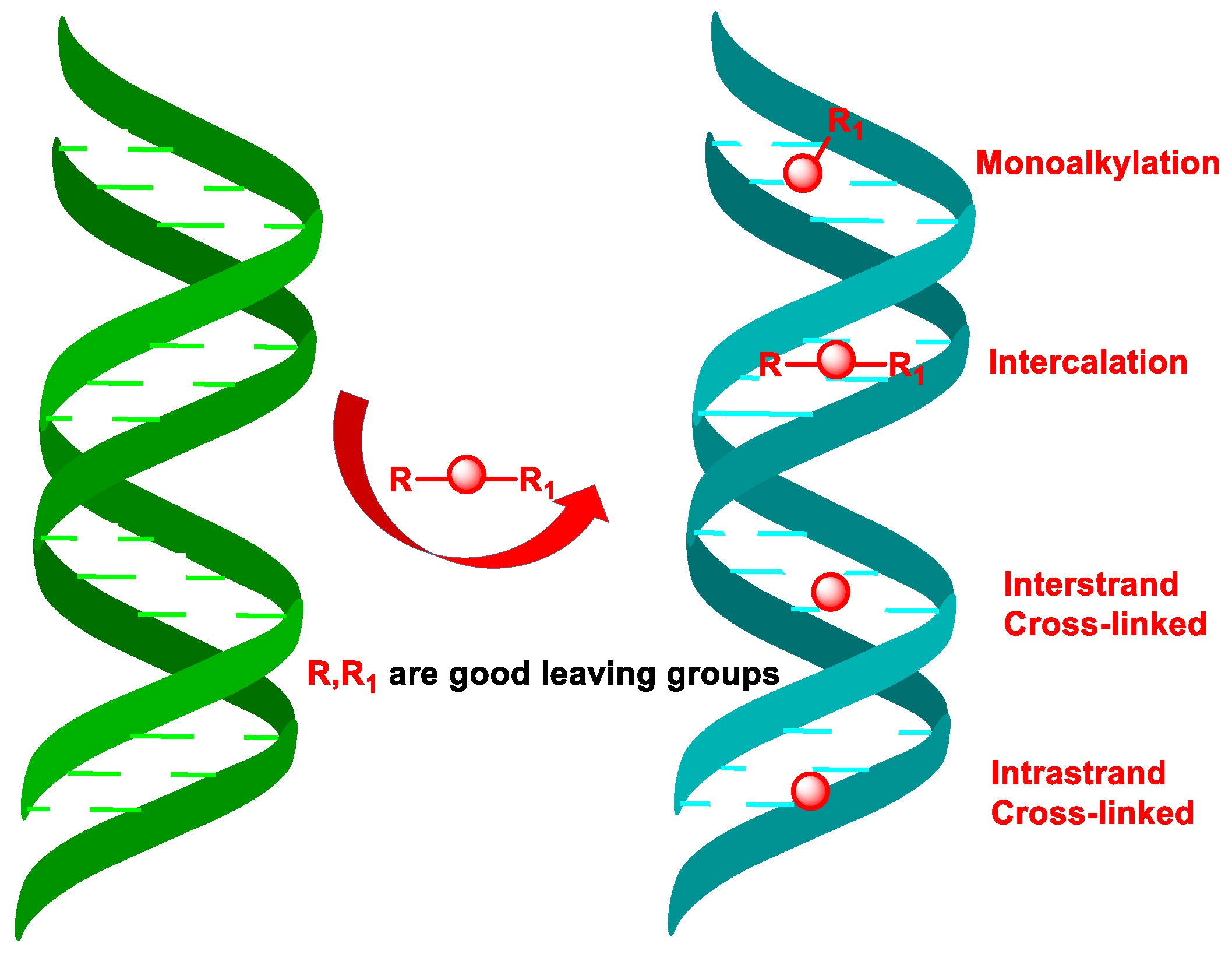
Dual-Action Therapeutics: DNA Alkylation and Antimicrobial Peptides for Cancer Therapy
Cancer remains one of the most difficult diseases to treat, requiring continuous research into innovative therapeutic strategies. Conventional treatments such as chemotherapy and radiotherapy are effective to a certain extent but often have significant side effects and carry the risk of resistance. In recent years, the concept of dual-acting therapeutics has attracted considerable attention, particularly the combination of DNA alkylating agents and antimicrobial peptides. DNA alkylation, a well-known mechanism in cancer therapy, involves the attachment of alkyl groups to DNA, leading to DNA damage and subsequent cell death. Antimicrobial peptides, on the other hand, have been shown to be effective anticancer agents due to their ability to selectively disrupt cancer cell membranes and modulate immune responses. This review aims to explore the synergistic potential of these two therapeutic modalities. It examines their mechanisms of action, current research findings, and the promise they offer to improve the efficacy and specificity of cancer treatments. By combining the cytotoxic power of DNA alkylation with the unique properties of antimicrobial peptides, dual-action therapeutics may offer a new and more effective approach to fighting cancer.
Curieses Andrés, Celia María; Pérez de Lastra, José Manuel; Bustamante Munguira, Elena; Andrés Juan, Celia; Pérez-Lebeña, Eduardo.
Constraining Present-Day Anthropogenic Total Iron Emissions Using Model and Observations
Iron emissions from human activities, such as oil combustion and smelting, affect the Earth's climate and marine ecosystems. These emissions are difficult to quantify accurately due to a lack of observations, particularly in remote ocean regions. In this study, we used long-term, near-source observations in areas with a dominance of anthropogenic iron emissions in various parts of the world to better estimate the total amount of anthropogenic iron emissions. We also used a statistical source apportionment method to identify the anthropogenic components and their sub-sources from bulk aerosol observations in the United States. We find that the estimates of anthropogenic iron emissions are within a factor of 3 in most regions compared to previous inventory estimates. Under- or overestimation varied by region and depended on the number of sites, interannual variability, and the statistical filter choice. Smelting-related iron emissions are overestimated by a factor of 1.5 in East Asia compared to previous estimates. More long-term iron observations and the consideration of the influence of dust and wildfires could help reduce the uncertainty in anthropogenic iron emissions estimates.

Rathod, Sagar D.; Hamilton, Douglas S.; Nino, Lance; Kreidenweis, Sonia M.; Bian, Qijing; Mahowald, Natalie M.; Alastuey, Andrés; Querol, Xavier; Paytan, Adina; Artaxo, Paulo; Herut, Barak; Gaston, Cassandra; Prospero, Joseph; Chellam, Shankararaman; Hueglin, Christoph; Varrica, Daniela; Dongarra, Gaetano; Cohen, David D.; Smichowski, Patricia; Gomez, Dario; Lambert, Fabrice; Barraza, Francisco; Bergametti, Gilles; Rodríguez, Sergio; Gonzalez-Ramos, Yenny; Hand, Jenny; Kyllönen, Katriina; Hakola, Hannele; Chuang, Patrick; Hopke, Philip K.; Harrison, Roy M.; Martin, Randall V.; Walsh, Brenna; Weagle, Crystal; Maenhaut, Willy; Morera-Gómez, Yasser; Chen, Yu Cheng; Pierce, Jeffrey R.; Bond, Tami C.
E-Cyanoacrylamides and 5-Imino Pyrrolones against Trypanosoma cruzi: Activity and Induced Mechanisms of Cell Death
Chagas disease is caused by a protozoan parasite called Trypanosoma cruzi. The infection produces a first clinical phase, commonly asymptomatic or showing non-specific symptoms, and a second chronic phase characterized by cardiac and digestive dysfunctions in some individuals with the disease. This disease affects 7 million people and has been categorized by the World Health Organisation as a neglected tropical disease. In addition, the drugs used to combat it were developed in the 1970s and present major toxicity problems and limited efficacy in the chronicity of the disease. This has led to research into new active compounds that are effective against the disease, with studies on cyanoderivatives showing promising activity. In this work, eight active E-cyanoacrylamides/5-imino pyrrolones were studied. Compounds B and F showed excellent activity, while compounds C and G stood out for their lower cytotoxicity. After correlating the activity and cytotoxicity of the compounds, it was observed that compounds B, C, and G obtained the most favourable results. Various cell death studies were carried out with these compounds, and it was determined that all of them produced programmed cell death, with compound B standing out as being at a late stage in the process.

Bethencourt-Estrella, Carlos J.; Delgado-Hernández, Samuel; López-Arencibia, Atteneri; Serafín-Pérez, Irene; Rodríguez-Santana, Paula; Rodríguez-Camacho, Sara; Fernández-Serafín, Carolina; Tejedor, David; Lorenzo-Morales, Jacob; Piñero, José E.
Inhibition of Yeast Hexokinase by Acyl Glucosides of Phloretin and its Implication in the Warburg Effect
Contrary to differentiated cells, cancer cells predominantly convert glucose to lactate even under conditions of adequate oxygen supply (“Warburg effect”). The initial enzyme implicated in this route is hexokinase, which transforms D-glucose into D-glucose-6-phosphate. We proposed the use of different polyphenols (resveratrol, epigallocatechin gallate, pterostilbene, phloretin) and their derivatives (α-glucosides and acylated α-glucosides) to inhibit this enzyme. For this study, we used Saccharomyces cerevisiae hexokinase, whose two isoforms show high resemblance at the active site with human hexokinase HK2. To monitor the reactions, a method of anion-exchange chromatography coupled with pulsed amperometric detection (HPAEC-PAD) was developed. Remarkably, most of the assayed compounds inhibited the enzyme more than 50 % in the standard assay. Among them, phloretin 4’-O-(6’’-O-octanoyl)-α-D-glucopyranoside showed the highest inhibition and was studied in depth to determine the inhibition pattern and inhibition constant. The Ki for glucose was calculated to be 22.1±0.4 μM. Computational models of inhibition were carried out with the three molecules displaying the highest inhibition, and correlated adequately with the observed inhibitory effects on the enzyme. The inhibitory effect of several of the assayed polyphenols on hexokinase and their lack of toxicity renders them promising candidates as adjuvant drugs for cancer therapy.

Cervantes, Fadia V.; Fernandez-Arrojo, Lucía; Coscolin, Cristina; Berrojo, Alicia; Gonzalez-Alfonso, José L.; Pérez de Lastra, José Manuel; Ferrer, Manuel; Curieses-Andres, Celia M.; Andres-Juan, Celia; Ballesteros, Antonio O.; Perez-Lebeña, Eduardo; Plou Gasca, Francisco José.
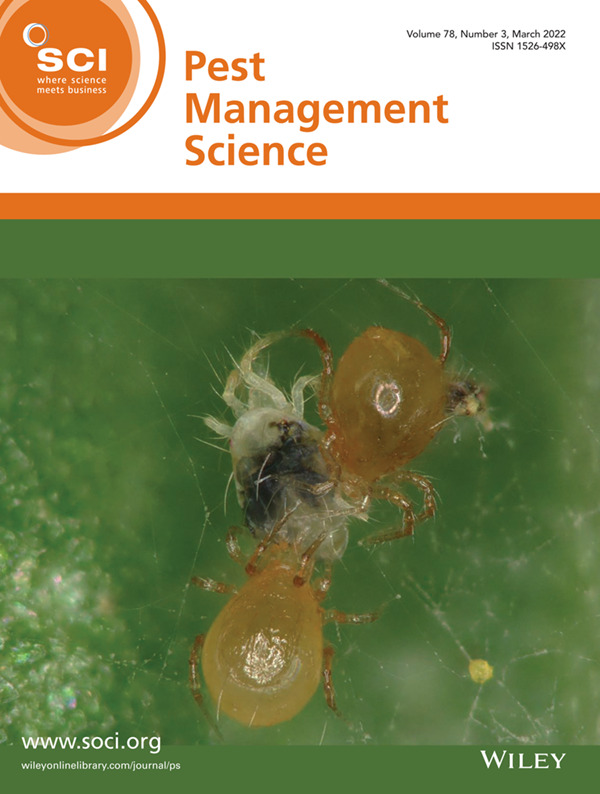
An ant-mimicking ant on an oceanic archipelago: Camponotus guanchus mimics Crematogaster alluaudi—An analogy with the situation of Camponotus lateralis (Hymenoptera: Formicidae)
Mimicry, that is, the imitation of any unpalatable or defensive species by another, has been of central interest to evolutionary research since Darwin's lifetime. Two ant species, Camponotus guanchus Santschi, 1908 and Crematogaster alluaudi Emery, 1893, endemic to the Canary Islands, occur in two color-morphs: While the head of workers is always reddish and the gaster blackish, the mesosoma (inclusive waist) is either fully reddish or fully blackish. In addition to the obvious morphological and coloration similarities, we provide evidence of mimicry: (i) Ca. guanchus was found only within the area of Cr. alluaudi. (ii) Color morphs are geographically non-randomly distributed: Workers of both species from 16 localities of syntopic occurrences shared in eight cases a blackish and in eight cases a reddish mesosoma. Hence, Ca. guanchus mimics both local color-morphs of Cr. alluaudi. We consider a fascinating analogy with the Mediterranean mimicry system in Camponotus lateralis (Olivier, 1792) and its model species of the Crematogaster scutellaris (Olivier, 1792) group on an island scale. Additionally, we present two endemic bug species, Perenotus stysi (Ribes et al., 2008) and P. malobae Roca-Cusachs & Goula, 2016, as mimics of those Cr. alluaudi workers having a reddish mesosoma. Our distribution, coloration, frequency, and behavioral data as well as the analogy with Ca. lateralis and the Cr. scutellaris group suggest a Batesian-mimicry system in which Ca. guanchus, Perenotus stysi, and P. malobae mimic the unpalatable and aggressive Cr. alluaudi as an antipredator adaptation.

Pérez-Delgado, Antonio J.; Wagner, Herbert C.
Synthesis and Biological Evaluation of Cyanoacrylamides and 5-Iminopyrrol-2-Ones Against Naegleria fowleri
Primary amoebic meningoencephalitis is caused by the free-living amoeba Naegleria fowleri. The lack of standardized treatment has significantly contributed to the high fatality rates observed in reported cases. Therefore, this study aims to explore the anti-Naegleria activity of eight synthesized cyanoacrylamides and 5-iminopyrrol-2-ones. Notably, QOET-109, QOET-111, QOET-112, and QOET-114 exhibited a higher selectivity index against Naegleria compared to those of the rest of the compounds. Subsequently, these chemicals were assessed against the resistant stage of N. fowleri, demonstrating activity similar to that observed in the vegetative stage. Moreover, characteristic events of programmed cell death were evidenced, including chromatin condensation, increased plasma membrane permeability, mitochondrial damage, and heightened oxidative stress, among others. Finally, this research demonstrated the in vitro activity of the cyanoacrylamide and 5-iminopyrrol-2-one molecules, as well as the induction of metabolic event characteristics of regulated cell death in Naegleria fowleri.

Chao-Pellicer, Javier; Delgado-Hernández, Samuel; Arberas-Jiménez, Iñigo; Sifaoui, Ines; Tejedor, David ; García-Tellado, Frnando; Piñero, José E.; Lorenzo-Morales, Jacob.
Novel tetrahydropyran-triazole hybrids with antiproliferative activity against human tumour cells
A series of new hybrid compounds was prepared combining tetrahydropyran rings with different aromatic systems by means of a 1,2,3-triazole, using a building block strategy. The design of these structures was guided by Lead-Likeness and Molecular Analysis (LLAMA) software, adding modifications to our most potent scaffold (the tetrahydropyran ring) to generate promising “lead-like” candidates, which were subsequently compared against reported anticancer compounds. Our synthesized compounds demonstrated significant antiproliferative activity when compared with the standards cisplatin and 5-fluorouracil, across a panel of six different tumor cell lines. Moreover, compared with our group's previous hybrid compounds, these new structures exhibit similar activity while offering simpler synthesis and greater potential for structural diversification, a fact that was previously an issue. Further investigations on the most active compounds included assessments of reproductive cell survival, inhibition of cell migration, and effects on nuclear morphology, indicating potential diverse mechanisms of action for these compounds. Pharmacokinetic properties were also calculated for the whole series of compounds using the pkCSM online software.

Quintana, Vanesa; González-Bakker, Aday; Khan, Adam N.; Padrón, Juan I.; Davyt, Danilo; Padrón, José M.; Valdomir, Guillermo.
From Data to Decisions: Leveraging Artificial Intelligence and Machine Learning in Combating Antimicrobial Resistance – a Comprehensive Review
The emergence of drug-resistant bacteria poses a significant challenge to modern medicine. In response, Artificial Intelligence (AI) and Machine Learning (ML) algorithms have emerged as powerful tools for combating antimicrobial resistance (AMR). This review aims to explore the role of AI/ML in AMR management, with a focus on identifying pathogens, understanding resistance patterns, predicting treatment outcomes, and discovering new antibiotic agents. Recent advancements in AI/ML have enabled the efficient analysis of large datasets, facilitating the reliable prediction of AMR trends and treatment responses with minimal human intervention. ML algorithms can analyze genomic data to identify genetic markers associated with antibiotic resistance, enabling the development of targeted treatment strategies. Additionally, AI/ML techniques show promise in optimizing drug administration and developing alternatives to traditional antibiotics. By analyzing patient data and clinical outcomes, these technologies can assist healthcare providers in diagnosing infections, evaluating their severity, and selecting appropriate antimicrobial therapies. While integration of AI/ML in clinical settings is still in its infancy, advancements in data quality and algorithm development suggest that widespread clinical adoption is forthcoming. In conclusion, AI/ML holds significant promise for improving AMR management and treatment outcome.

Pérez de Lastra, José Manuel; Wardell, Samuel J. T.; Pal, Tarun; de la Fuente-Núñez, César; Pletzer, Daniel.
Ecological drivers of taxonomic, functional, and phylogenetic diversity of bryophytes in an oceanic island
Martins, Anabela; Collart, Flavien; Sim-Sim, Manuela; Patiño, Jairo.

Martins, Anabela; Collart, Flavien; Sim-Sim, Manuela; Patiño, Jairo.
Changes at small intestine induced by food-fish contaminated with ciguatoxins
Ciguateric syndrome is a food poisoning associated with the consumption of some species of fish that have accumulated ciguatoxins (CTXs) in their tissues. The effects of the syndrome occur with nervous imbalances which have been described for quite some time, and mentioned in sailing literature for centuries. In the last decade, research has been focused on the implementation of analytical methods for toxin identification and the study of action modes of CTXs to design effective treatments. However, an important aspect is to determine the damage that CTXs caused in the organs of affected individuals. In this work, the damages observed in tissues of mice, mainly in the small intestine, were analyzed. The animals were fed with CTX-contaminated fish muscle at concentrations 10-times below the median lethal dose (LD50) for 10 weeks. The analysis of tissues derived from the oral treatment resulted in an increased occurrence of Paneth cells, presence of lymphoid tissue infiltrating the mucosa and fibrous lesions in the mucosal layer of the small intestine. A decreasing weight in animals fed with toxic muscle was observed.

Hernández-López, Víctor; Reyes, Ricardo; García-Álvarez, Natalia; Real, Fernando; Díaz-Marrero, Ana Raquel; Fernández, José J.