Publicaciones
Esta sección incluye una lista de los últimos artículos científicos del IPNA publicados en revistas incluidas en el Science Citation Index (SCI).
En DIGITAL.CSIC, repositorio institucional del CSIC, pueden encontrar el listado completo de artículos científicos desde 1962, así como otras colecciones de interés como congresos, tesis, libros, material divulgativo, etc. del centro. El objetivo de DIGITAL.CSIC es organizar, preservar y difundir en acceso abierto los resultados de nuestra investigación.
En el repositorio institucional del CSIC, pueden encontrar el listado completo de artículos científicos, así como otras colecciones de interés como congresos, tesis, libros, material divulgativo, etc.
Análisis de la Producción Científica del IPNA 2014-2019: análisis bibliométrico realizado a partir de datos recogidos en Scopus y Web of Science.

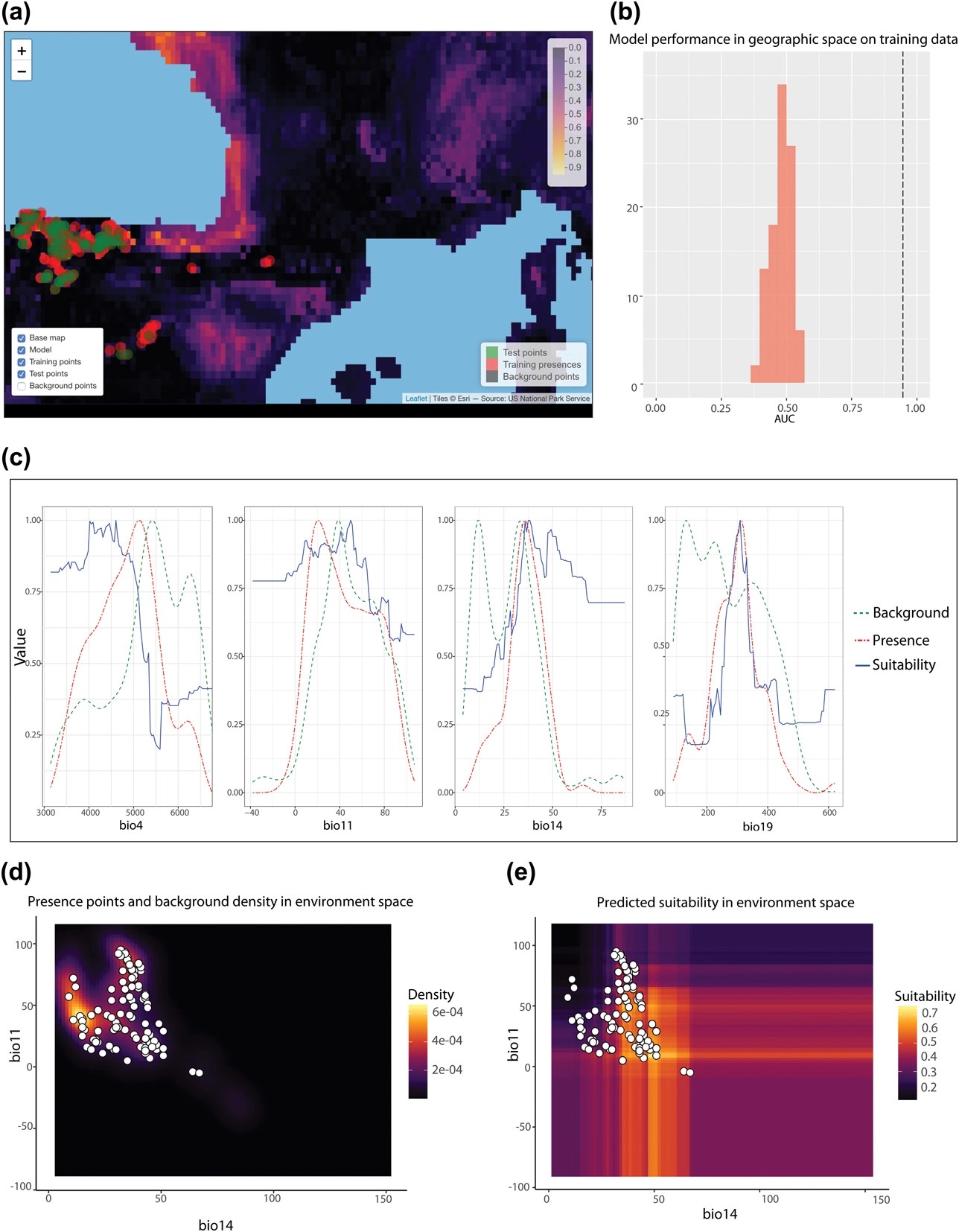
ENMTools 1.0: an R package for comparative ecological biogeography
The ENMTools software package was introduced in 2008 as a platform for making measurements on environmental niche models (ENMs, frequently referred to as species distribution models or SDMs), and for using those measurements in the context of newly developed Monte Carlo tests to evaluate hypotheses regarding niche evolution. Additional functionality was later added for model selection and simulation from ENMs, and the software package has been quite widely used. ENMTools was initially implemented as a Perl script, which was also compiled into an executable file for various platforms. However, the package had a number of significant limitations; it was only designed to fit models using Maxent, it relied on a specific Perl distribution to function, and its internal structure made it difficult to maintain and expand. Subsequently, the R programming language became the platform of choice for most ENM studies, making ENMTools less usable for many practitioners. Here we introduce a new R version of ENMTools that implements much of the functionality of its predecessor as well as numerous additions that simplify the construction, comparison and evaluation of niche models. These additions include new metrics for model fit, methods of measuring ENM overlap, and methods for testing evolutionary hypotheses. The new version of ENMTools is also designed to work within the expanding universe of R tools for ecological biogeography, and as such includes greatly simplified interfaces for analyses from several other R packages.
Warren, Dan L.; Matzke, Nicholas J.; Cardillo, Marcel; Baumgartner, John B.; Beaumont, Linda J.; Turelli, Michael; Glor, Richard E.; Huron, Nicholas A.; Simões, Marianna; Iglesias, Teresa L.; Piquet, Julien C.; Dinnage, Russell
El pino canario confiere matices únicos al vino palmero
El 25 de septiembre de 2015, los líderes mundiales adoptaron un conjunto de objetivos globales para erradicar la pobreza, proteger el planeta y asegurar la prosperidad para todos como parte de una nueva agenda de desarrollo sostenible. Cada objetivo tiene metas específicas que deben alcanzarse en los próximos 15 años. Para alcanzar estas metas, todo el mundo tiene que hacer su parte: los gobiernos, el sector privado, la sociedad civil y todos los estratos de la sociedad. Desde el IPNA-CSIC, hemos desarrollado una campaña de divulgación encaminada a explicar estos objetivos a la sociedad y, en particular, a los estudiantes de secundaria y universitarios. Las siguientes infografías exploran distintos de los retos planteados por la Organización de las Naciones Unidas en su Agenda 2030 y expone las distintas acciones que desde la investigación se plantean para superarlos. Además, al pinchar sobre cada cartel, se accederá a distintos materiales divulgativos sobre el tema, como un artículo de divulgación o un podcast con un investigador experto del IPNA. En esta infografía muestra el estudio las propiedades del vino de tea, fermentado en barricas obtenidas del núcleo del Pinus Canariensis.

Alonso-González, Pablo; Parga-Dans, Eva.
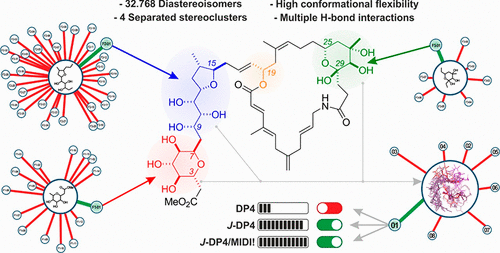
Are Computational Methods Useful for Structure Elucidation of Large and Flexible Molecules? Belizentrin as a Case Study
Quantum mechanical NMR methods are progressively becoming decisive in structure elucidation. However, problems arise using low-level calculations for complex molecules, whereas methods using higher levels of theory are not practical for large molecules. This report outlines a synergistic effort employing computationally inexpensive quantum mechanical NMR calculations with conformer selection incorporating 3JHH values as a way to solve the structure of large, complex, and highly flexible molecules using readily available computational resources with belizentrin as a case study.
Hernández Daranas, Antonio; Sarotti, Ariel M.
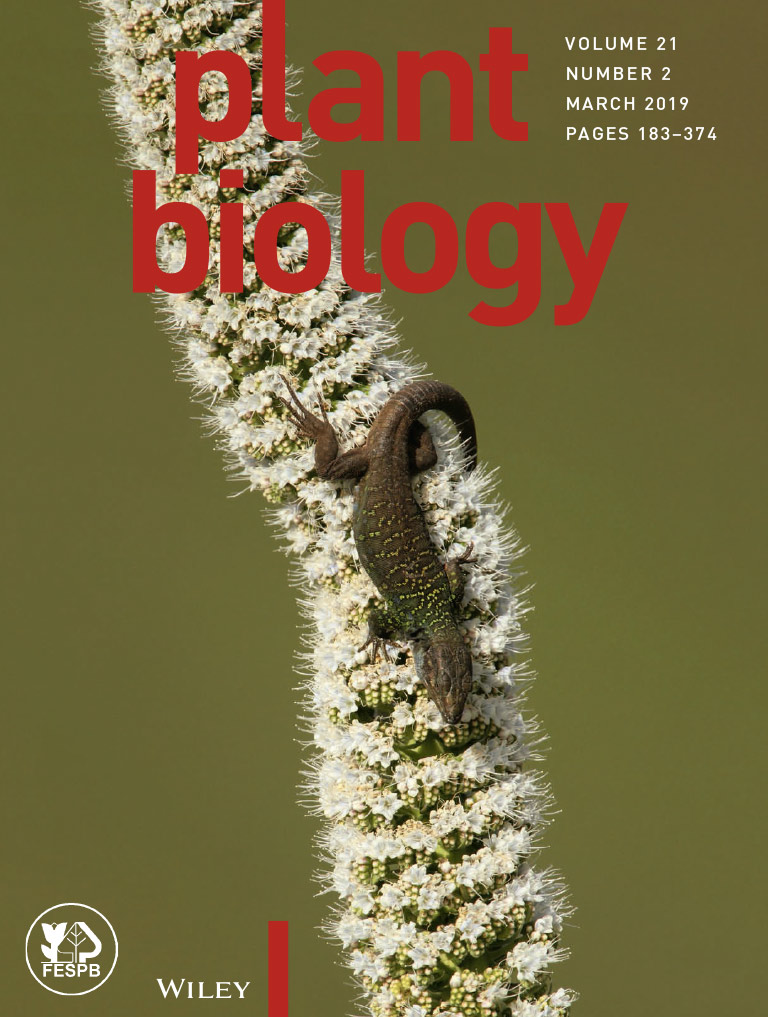
The role of the brown bear Ursus arctos as a legitimate megafaunal seed disperser
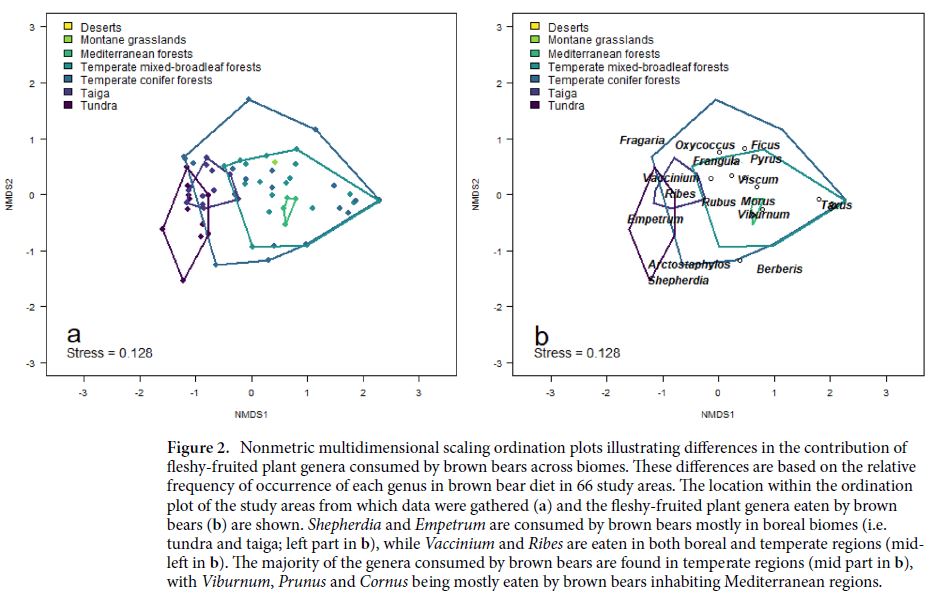
Megafaunal frugivores can consume large amounts of fruits whose seeds may be dispersed over long distances, thus, affecting plant regeneration processes and ecosystem functioning. We investigated the role of brown bears (Ursus arctos) as legitimate megafaunal seed dispersers. We assessed the quantity component of seed dispersal by brown bears across its entire distribution based on information about both the relative frequency of occurrence and species composition of fleshy fruits in the diet of brown bears extracted from the literature. We assessed the quality component of seed dispersal based on germination experiments for 11 fleshy-fruited plant species common in temperate and boreal regions and frequently eaten by brown bears. Across its distribution, fleshy fruits, on average, represented 24% of the bear food items and 26% of the total volume consumed. Brown bears consumed seeds from at least 101 fleshy-fruited plant species belonging to 24 families and 42 genera, of which Rubus (Rosaceae) and Vaccinium (Ericaceae) were most commonly eaten. Brown bears inhabiting Mediterranean forests relied the most on fleshy fruits and consumed the largest number of species per study area. Seeds ingested by bears germinated at higher percentages than those from whole fruits, and at similar percentages than manually depulped seeds. We conclude that brown bears are legitimate seed dispersers as they consume large quantities of seeds that remain viable after gut passage. The decline of these megafaunal frugivores may compromise seed dispersal services and plant regeneration processes.
García-Rodríguez, Alberto; Albrecht; Jörg, Szczutkowska, Sylwia; Valido, Alfredo; Farwing, Nina; Selva, Nuria
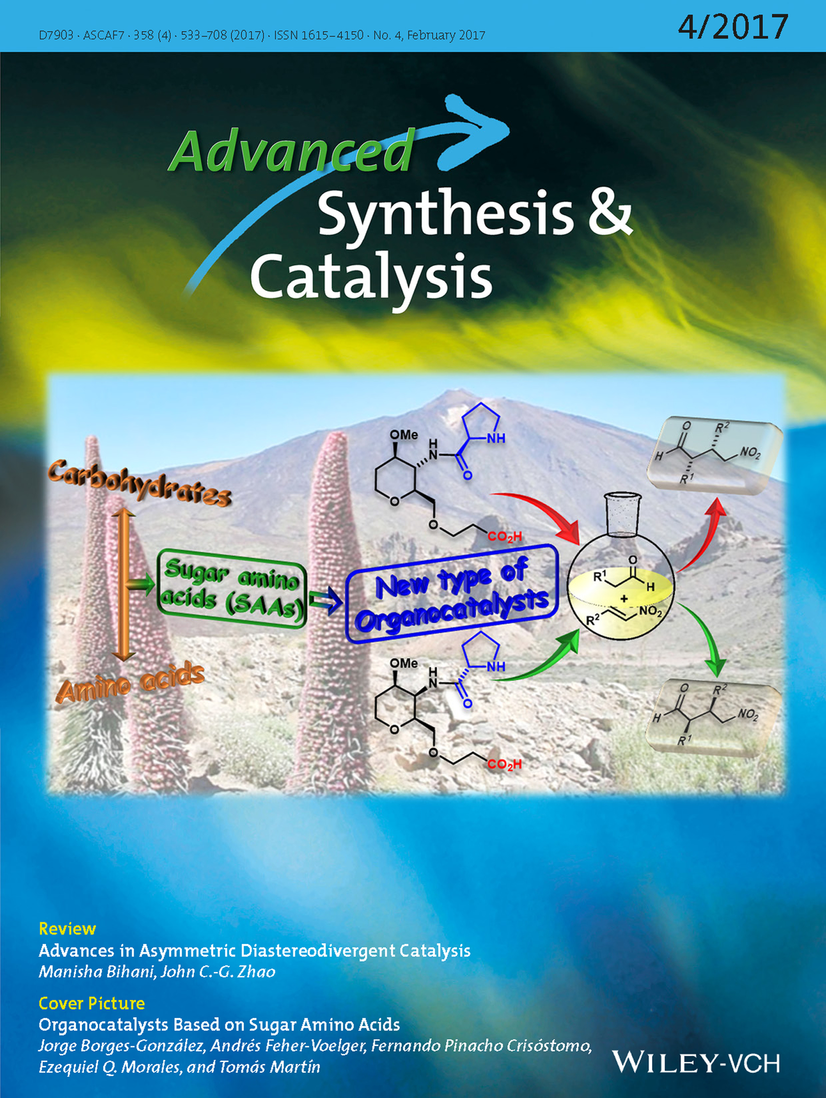
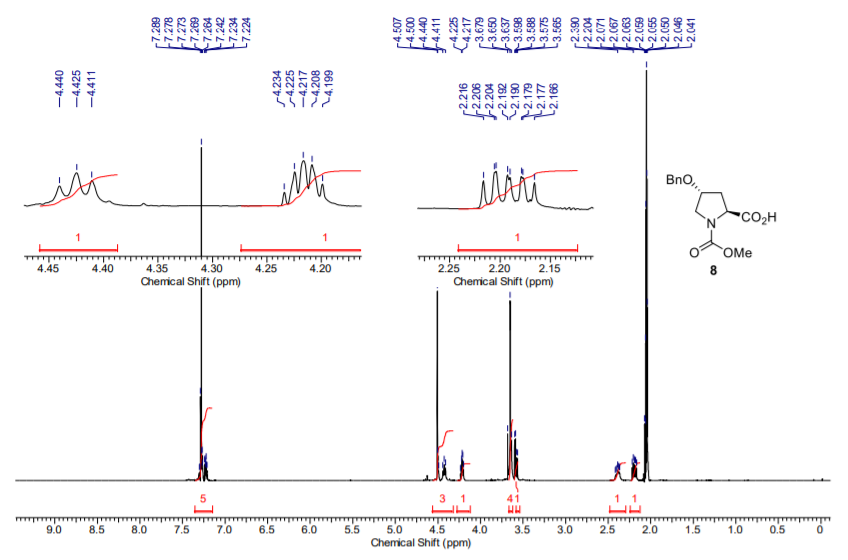
“Doubly Customizable” Unit for the Generation of Structural Diversity: From Pure Enantiomeric Amines to Peptide Derivatives
Readily available, low-cost 4R-hydroxy-l-proline (Hyp) is introduced as a “doubly customizable” unit for the generation of libraries of structurally diverse compounds. Hyp can be cleaved at two points, followed by the introduction of new functionalities. In the first cycle, the removal and replacement of the carboxylic group are carried out, followed (second cycle) by the scission of the 4,5-position and manipulation of the resulting chains. In this way, three new chains are generated and can be transformed independently to afford a diversity of products with tailored substituents, such as β-amino aldehydes, diamines, β-amino acid derivatives, including N-alkylated ones, or modified peptides. Many of these products are high-profit compounds but, in spite of their commercial value, are still scarce. Moreover, the process takes place with stereochemical control, and either pure R or S isomers can be obtained with small variations of the synthetic route.
Hernández, Dácil; Carro, Carmen; Boto, Alicia
Application of stimuli-responsive materials for extraction purposes
Stimuli-responsive materials, frequently designated as “smart/intelligent materials”, can modify their structure or properties by either a biological, physical, or chemical stimulus which, if properly controlled, could be used for specific applications. Such materials have been studied and exploited in several fields, like electronics, photonics, controlled drugs administration, imaging and medical diagnosis, among others, as well as in Analytical Chemistry where they have been used as chromatographic stationary phases, as part of sensors and for extraction purposes. This review article pretends to provide an overview of the most recent applications of these materials (mostly polymeric materials) in sample preparation for extraction purposes, as well as to provide a general vision of the current state-of-the-art of this field, their potential use and future applications.
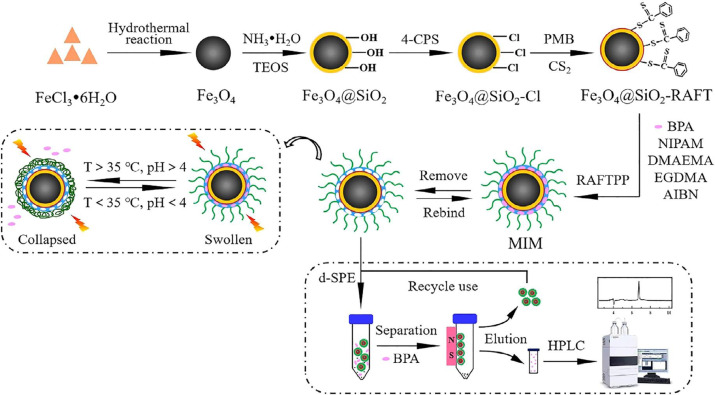
González-Sálamo, Javier; Ortega-Zamora, Cecilia; Carrillo Fumero, Romen; Hernández-Borges, Javier
Polyoxygenated anti-inflammatory biscembranoids from the soft coral Sarcophyton tortuosum and their stereochemistry
Five novel biscembranoids, ximaolides H–L (1–5), along with four known related compounds (6–9) were isolated from the Hainan soft coral Sarcophyton tortuosum. The structures of the new compounds were determined by extensive spectroscopic analysis, quantum chemical calculations, and/or by comparing their CD spectra with those of the known compounds. Compounds 1 and 2 are the first examples of biscembranoids bearing a 1, 35-bridged lactone moiety, 4 is the first biscembranoid comprising an uncommon oxetane ring, and 5 represents the first 36-peroxyl biscembranoid. Ximaolides I (2), K (4) and F (9) exhibited interesting anti-inflammatory activity by the inhibition of LPS-induced TNF-α protein release in RAW264.7 macrophages.
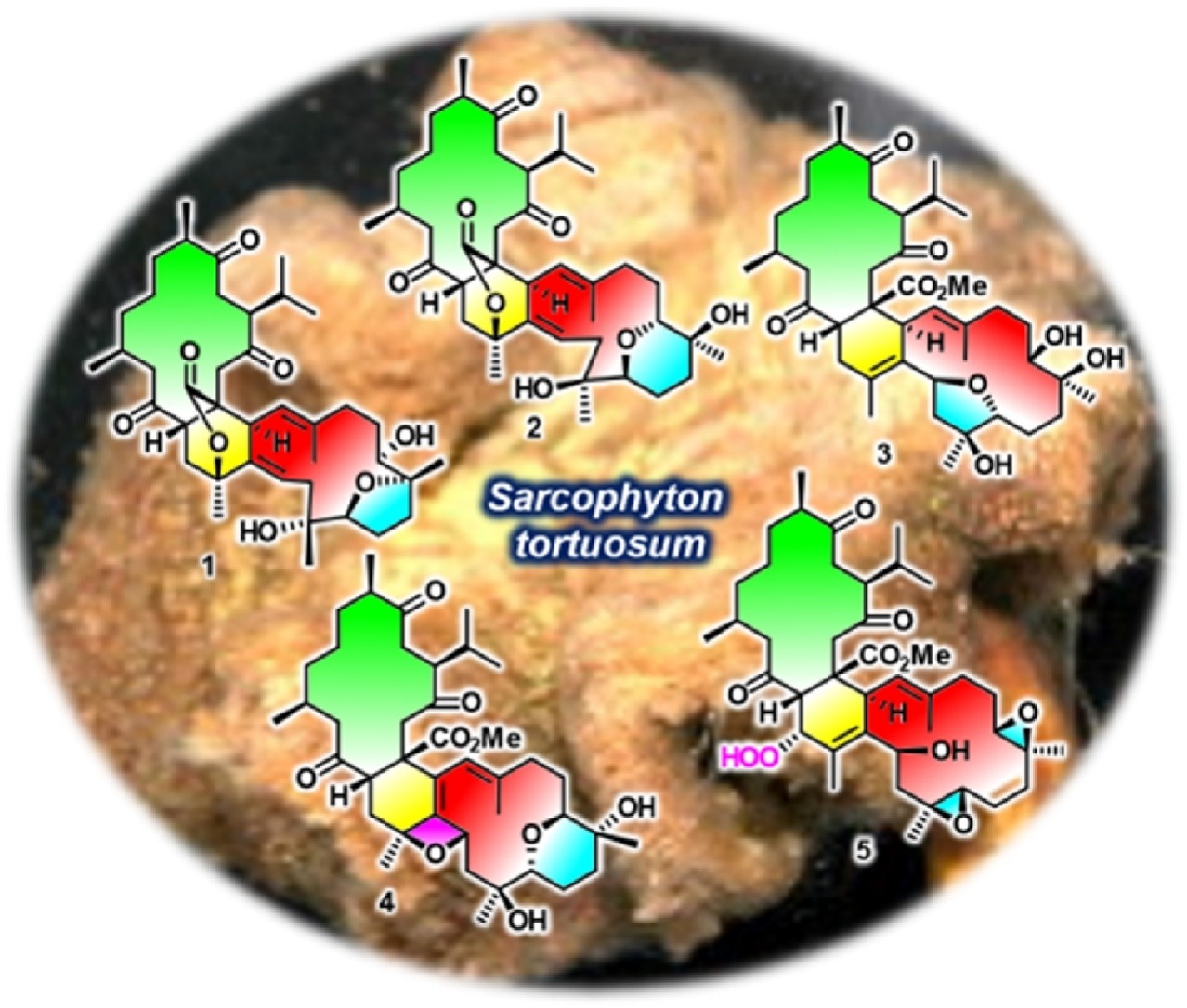
Li, Yufen; Li, Songwei; Cuadrado, Cristina; Gao, Chenglong; Wu, Qihao; Li, Xiaolu; Pang, Tao; Hernández Daranas, Antonio; Guo, Yuewei; Li, Xuwen
Agroecology and circular bioeconomy
[EN] Results provided by a panel of experts reveal that some of the vital challenges facing Agroecology in the near future involve its contribution to Climate Action, to increasing biodiversity or to the co-creation of knowledge by researchers and farmers, as well as the application of criteria of Circular Bioeconomy to agro-food production and distribution. Other noteworthy challenges refer to the design of agroecosystems at landscape scale or the creation of agroecological local food systems enabling an upscaling of production and consumption.
[ES] Los resultados de un panel de expertos reflejan que algunos importantes desafíos que tiene la Agroecología cara al futuro próximo son su contribución a la Acción por el Clima, a la mejora de la biodiversidad o a la co-creación de conocimiento entre investigadores y campesinos, así como la aplicación de criterios de Bioeconomía Circular en la producción y distribución agroalimentarias. El diseño de agroecosistemas a escala de paisaje o la creación de sistemas alimentarios locales agroecológicos que posibiliten un salto de escala de la producción y el consumo constituyen también otros retos destacables.

Sanz Cañada, Javier; Gómez Aparicio, Lorena; Alonso-González, Pablo; Cayuela, María Luz; Gómez Calero, José Alfonso; Guzmán, Gloria I.; González de Molina, Manuel; Lavín, Paz; Llobera Serra, Franco; Martínez-Rodríguez, C.; Moreno, Aránzazu; Peña-Chocarro, Leonor; Tomé Martín, Pedro; Valladares Ros, Fernando.
First record of the carpenter bee Xylocopa pubescens (Hymenoptera, Apidae) in the Canary Islands confirmed by DNA barcoding
Island ecosystems are particularly vulnerable to the introduction of exotic species that can have an impact on local fauna and flora. Here, the carpenter bee Xylocopa pubescens is reported in Gran Canaria (Canary Islands, Spain) for the first time. This species is native to North Africa and the Near East and shows a rapid dispersion across the city of Las Palmas de Gran Canaria, together with a single record in the southernmost tip of the island. Different hypotheses about its arrival to the island are discussed.
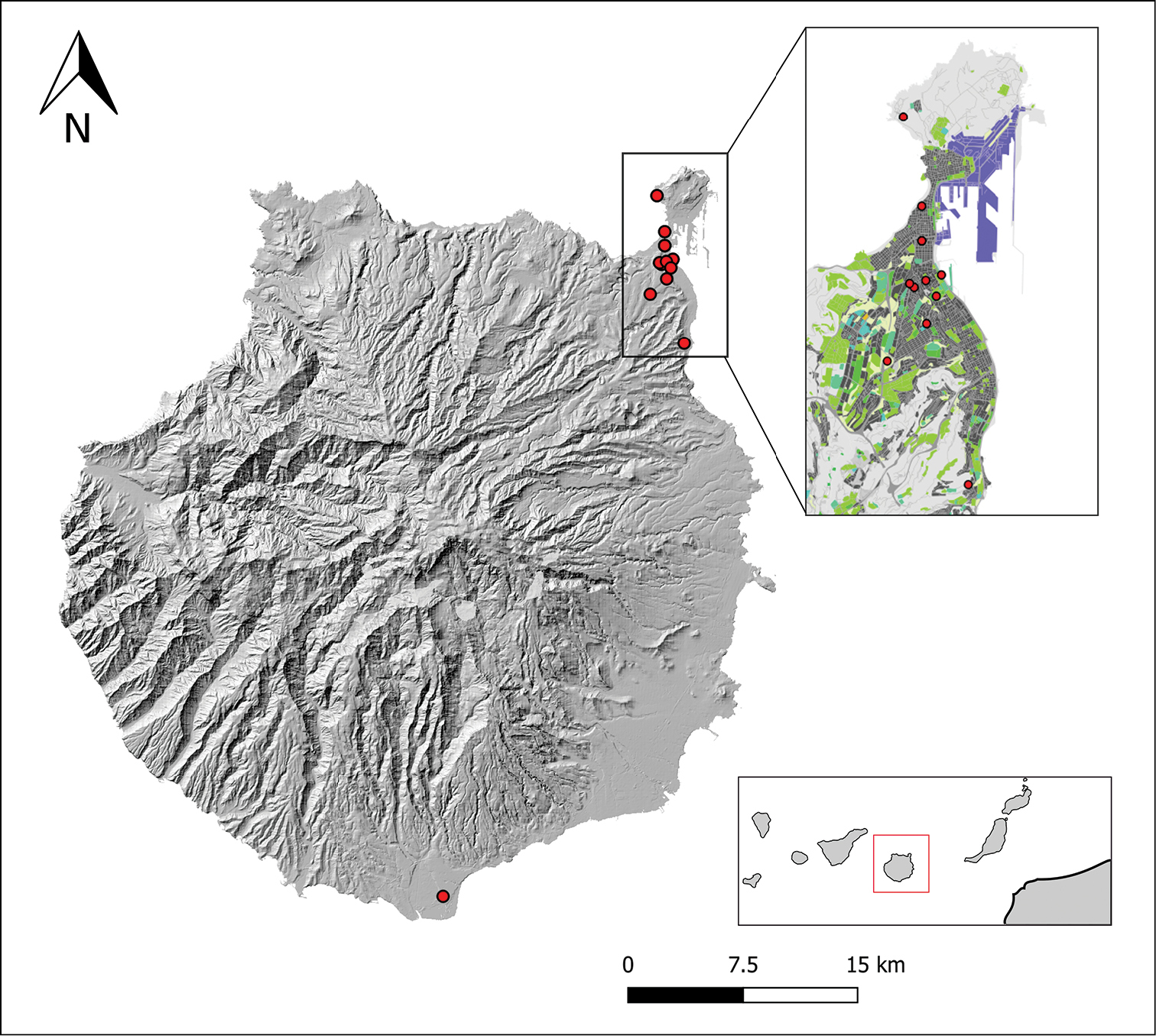
Ruiz, Carlos; Suárez, Daniel; Naranjo, Manuel; De la Rúa, Pilar
Structure and Computational Basis for Backbone Rearrangement in Marine Oxasqualenoids
Six novel oxasqualenoids (polyether triterpenes) were isolated from the red alga Laurencia viridis. Laurokanols A–E (1–5) comprise an unreported tricyclic core with a [6,6]-spiroketal system. Yucatecone (6) shows a biogenetically intriguing epimerization at C14. Quantum mechanical calculations were used to corroborate their structures and to explain key steps involved in the biogenetic mechanisms proposed for the formation of oxasqualenoids.
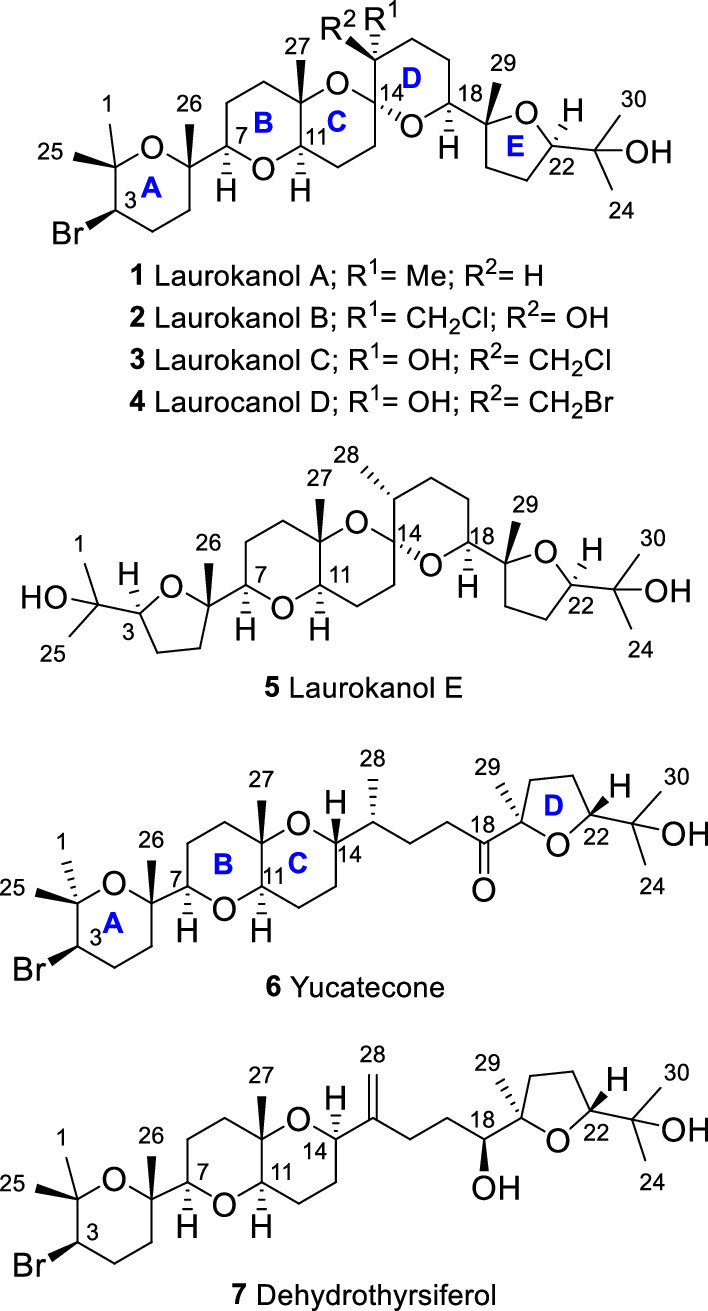
Cen-Pacheco, Francisco; Santiago-Benítez, Adrián J.; Tsui, Ka Yi; Tantillo, Dean J.; Fernández, José J.; Hernández Daranas, Antonio