Publications
This section includes a list of the latest IPNA scientific articles published in journals included in the Science Citation Index (SCI).
In DIGITAL.CSIC, institutional repository of the CSIC, you can find the complete list of scientific articles since 1962, as well as other collections of interest such as congresses, theses, books, informative material, etc. of the centre. The aim of DIGITAL.CSIC is to organize, preserve and disseminate in open access the results of our research.
In the institutional repository of the CSIC, you can find the complete list of scientific articles, as well as other collections of interest such as congresses, theses, books, informative material, etc.
Analysis of the IPNA 2014-2019 Scientific Production: bibliometric analysis from data collected in Scopus and Web of Science.

Dehydrothyrsiferol Against Cutaneous Leishmaniasis: Treatment Outcome in a Murine Model
One of the most important steps in preclinical drug discovery is to demonstrate the in vivo efficacy of potential leishmanicidal compounds and good characteristics at the level of parasite killing prior to initiating human clinical trials. This paper describes the use of dehydrothyrsiferol (DT), isolated from the red alga Laurencia viridis, in a pharmaceutical form supported on Sepigel, and the in vivo efficacy against a mouse model of cutaneous leishmaniasis. Studying the ultrastructural effect of DT was also carried out to verify the suspected damage at the cellular level and determine the severity of damages produced in the homeostasis of promastigotes. BALB/c mice infected with Leishmania amazonensis were divided into four groups: untreated mice, mice treated with miltefosine orally and mice treated topically with 1% and 0.5% DT-Sepigel; treatment was carried out for two weeks. Treatment with DT significantly reduced the parasite load in skin, liver and spleen compared with the untreated group. In addition, DT-Sepigel at the lowest concentration (0.5%) showed the best results, reducing lesion size by 87% at 3 weeks post-treatment. DT-Sepigel has demonstrated to be a potent topical treatment that, in combined drug trials, may aim at combating cutaneous leishmaniasis.

López-Arencibia, Atteneri; Bethencourt-Estrella, Carlos J.; San Nicolás-Hernández, Desirée; Rodríguez-Expósito, Rubén L.; Domínguez-de-Barros, Angélica; Salazar-Villatoro, Lizbeth; Omaña-Molina, Maritza; Cen-Pacheco, Francisco; Díaz-Marrero, Ana Raquel; Fernández, José J.; Córdoba-Lanús, Elizabeth; Lorenzo-Morales, Jacob; Piñero, José E.
Volcanic eruption and wildfires as compounding drivers of first-year seedling establishment in Canary pine
On the island of La Palma, located in the Canary Islands, Spain, the Canary pine forest is largely unmanaged and depends on natural regeneration for sustainable population dynamics. Canary pine (Pinus canariensis C.Sm. ex DC.) has been continuously exposed to volcanic eruptions over evolutionary time scales. The species exhibits many adaptations to wildfires, but the current fire regime is likely not natural. While both volcanic eruptions and wildfires can devastate existing vegetation and unbalance ecosystems, they can also facilitate plant growth through mechanisms like nutrient release and increased light availability. Occasional successful regeneration events, driven by high first-year seedling establishment following a disturbance, could be essential to maintaining population structures. We investigated the interactions of volcanic eruption and past wildfires on first-year seedling establishment in the Canary pine forest after the 2021 Cumbre Vieja volcanic eruption. We combined in-situ seedling abundance data from 117 plots (5 m radius) with remote sensing to test the hypotheses that (1) the favorable conditions created by the eruption triggered a localized pulse in first-year seedling establishment of Canary pine and (2) seedling establishment was diminished in areas affected previously by wildfires (2012 and 2016). Using a two-part approach, consisting of univariate analysis of individual factors and multivariate analysis with generalized additive models, we find evidence consistent with our hypotheses. Plots located closer to the volcano and more heavily impacted by the eruption were significantly associated with higher seedling abundance (> 50 per plot). Furthermore, plots that had experienced prior burning in addition to volcanic impact showed lower seedling densities compared to plots impacted solely by the volcano. This suggests that fire history negatively influenced first-year seedling establishment following the eruption. We discuss the role of both wildfires and volcanic eruptions in the evolutionary history of Canary pine and highlight the task of disentangling the legacies of these two disturbances. Serotiny, traditionally considered to be a fire-specific adaptation, appears to also function after and increase the resilience of Canary pine to volcanic eruptions at the stand-level. Lastly, we raise the question of whether recurrent disturbances exceeding natural system dynamics could endanger the future demography of Canary pine by limiting infrequent but necessary forest regeneration events.

Wilkens, Vincent; Shatto, Christopher; Walentowitz, Anna; Weiser, Frank; Otto, Rüdiger; Guerrero-Campos, María; Jentsch, Anke; Medina, Félix M.; Marrero, Patricia; Nogales, Manuel; Vetaas, Ole R.; Beierkuhnlein, Carl.
From Psychoactivity to Antimicrobial Agents: Multifaceted Applications of Synthetic Cathinones and Catha edulis Extracts
The emergence of new psychoactive substances (NPS) in the global drug market since the 2000s has posed major challenges for regulators and law enforcement agencies. Among these, synthetic cathinones have gained prominence due to their stimulant effects on the central nervous system, leading to widespread recreational use. These compounds, often marketed as alternatives to illicit stimulants such as amphetamines and cocaine, have been linked to numerous cases of intoxication, addiction and death. The structural diversity and enantiomeric forms of synthetic cathinones further complicate their detection and regulation and pose challenges to forensic toxicology. In addition to their psychoactive and toxicological effects, new research suggests that cathinones may have antimicrobial properties. Compounds derived from Catha edulis (khat), including cathinone, have shown antimicrobial activity against multidrug-resistant bacteria such as Staphylococcus aureus and Escherichia coli, highlighting their potential role in the fight against antibiotic resistance. This article provides an overview of the chemistry, pharmacokinetics, pharmacodynamics, toxicological effects and potential antimicrobial applications of synthetic cathinones. The potential therapeutic use of cathinone-derived compounds to combat antimicrobial resistance represents an exciting new frontier in drug development, although further research is needed to balance these benefits with the psychoactive risks.

Curieses Andrés, Celia María; Pérez de Lastra, José Manuel; Bustamante Munguira, Elena; Andrés Juan, Celia; Pérez-Lebeña, Eduardo.
Arthropod mtDNA paraphyly: a case study of introgressive origin
Mitochondrial paraphyly between arthropod species is not uncommon and has been speculated to largely be the result of incomplete lineage sorting (ILS) of ancestral variation within the common ancestor of both species, with hybridization playing only a minor role. However, in the absence of comparable nuclear genetic data, the relative roles of ILS and hybridization in explaining mitochondrial DNA (mtDNA) paraphyly remain unclear. Hybridization itself is a multifaceted gateway to mtDNA paraphyly, which may lead to paraphyly across both the nuclear and mitochondrial genomes, or paraphyly that is largely restricted to the mitochondrial genome. These different outcomes will depend upon the frequency of hybridization, its demographic context, and the extent to which mtDNA is subject to direct selection, indirect selection, or neutral processes. Here, we describe extensive mtDNA paraphyly between two species of iron-clad beetle (Zopheridae) and evaluate competing explanations for its origin. We first test between hypotheses of ILS and hybridization, revealing strong nuclear genetic differentiation between species, but with the complete replacement of Tarphius simplex mtDNA through the introgression of at least 5 mtDNA haplotypes from T. canariensis. We then contrast explanations of direct selection, indirect selection, or genetic drift for observed patterns of mtDNA introgression. Our results highlight how introgression can lead to complex patterns of mtDNA paraphyly across arthropod species, while simultaneously revealing the challenges for understanding the selective or neutral drivers that underpin such patterns.

Noguerales, Víctor; Emerson, Brent C.
Taxonomic assessment and historical context of Reichardia intermedia (Asteraceae) in the Canary Islands
The Canary Islands harbor four species of the genus Reichardia according to the current knowledge. Three of them are endemic to the archipelago, one is widespread but probably also native. The discovery of a putative population of R. intermedia on La Gomera as a fifth Reichardia species triggered the revisiting of neglected historical occurrence reports of Reichardia for the Canarian archipelago. We combined phylogenetic and morphological evidence to confirm the identity of the newly discovered population and assessed the previous reports for the archipelago. Based on these findings, we confirm the presence of R. intermedia in the Canary Islands.

Sicilia-Pasos, Guillermo; Arjona, Yuren; Padrón-Mederos, Miguel A.; Reyes-Betancort, J. Alfredo; García, Ángel; Jay-García, Louis S.; Tuero-Septién, Javier; Patiño, Jairo.
Climb forest, climb: diverse disperser communities are key to assist plants tracking climate change on altitudinal gradients
- Climate change is forcing species to shift their distribution ranges. Animal seed dispersers might be particularly important in assisting plants tracking suitable climates to higher elevations. However, this role is still poorly understood due to a lack of comprehensive multi-guild datasets along elevational gradients.
- We compiled seed dispersal networks for the five altitudinal vegetation belts of the Tenerife Island (0–3718 m above sea level) to explore how plant and animal species might facilitate the mutual colonisation of uphill habitats under climate change.
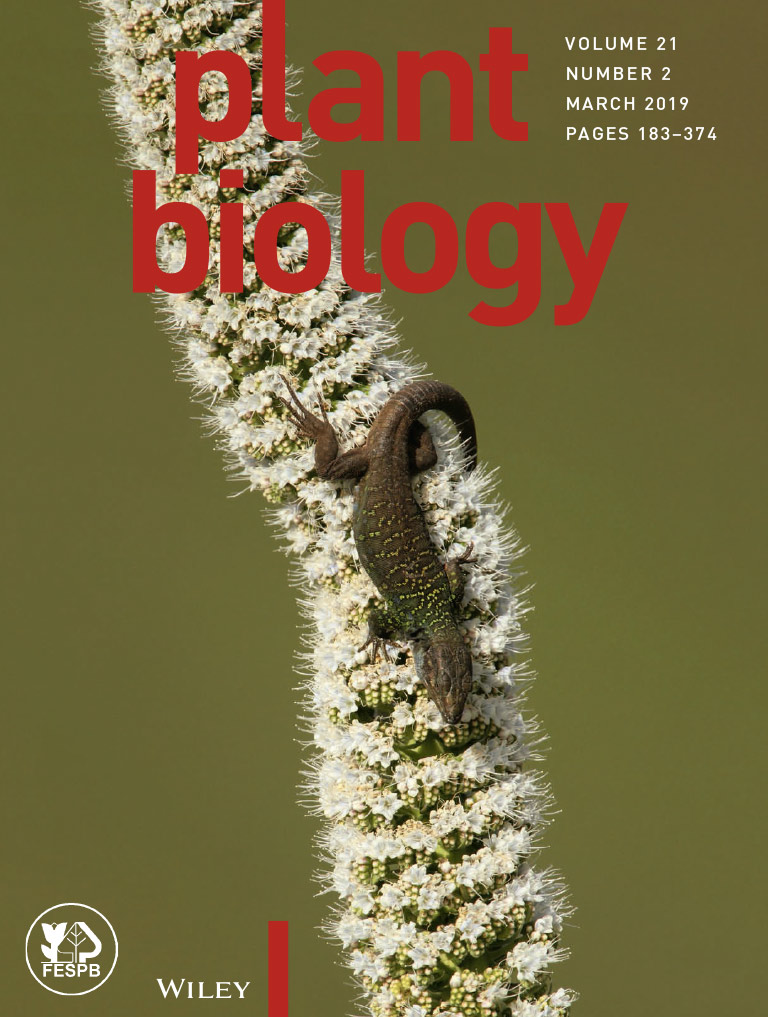
- The overall network comprised 283 distinct interactions between 73 plant and 27 animal species, with seed dispersers offering viable pathways for plants to colonise upper vegetation belts. A pivotal role is played by a lizard as island-level hub, while four birds and one introduced mammal (rabbit) are also important connectors between belts. Eleven plant species were empirically found to be actively dispersed to elevations beyond their current known range, with observed vertical dispersal distances largely surpassing those required to escape climate change. Furthermore, over half of the plants arriving at higher elevations were exotic.
- Functionally diverse disperser communities are crucial for enabling plants tracking climate change on mountains, but exotic plants might particularly benefit from this upward lift.

Mendes, Sara Beatriz; Nogales, Manuel; Vargas, Pablo; Olesen, Jens M.; Marrero, Patricia; Romero, Javier; Rumeu, Beatriz; González-Castro, Aarón; Heleno, Ruben.
Termite (Blattodea: Isoptera) Distribution Along an Elevational Gradient in Northwestern African Mountains
We examined the distribution of termites along an elevational gradient in the western Rif Mountains of northern Morocco. Sampling followed standardized protocols at nine forest sites (125, 325, 488, 715, 850, 1150, 1316, 1544, and 1700 masl), all except the lowest site within the Intercontinental Mediterranean Biosphere Reserve. We found a total of three termite species, with Reticulitermes grassei (Rhinotermitidae) being the most abundant, followed by Kalotermes flavicollis (Kalotermitinae) and Amitermes sp. (Terminidae). Comparing microhabitat preferences, we found R. grassei and Amitermes sp. exclusively in buried wood and under rocks, and K. flavicollis exclusively in dead tree trunks and surface wood. The findings reveal the distribution of microhabitats along an elevation gradient and the corresponding preferences of termite species across these microhabitats. We found that total termite density decreased significantly with elevation (rs = −0.40; p < 0.001), but with distinct differences among species. Kalotermes flavicollis and Amitermes sp. showed a strong negative correlation between density and elevation. In contrast, for R. grassei, the most common termite, we found no significant correlation. Termite density also varied among forest types, with a non-significant trend (p = 0.075) of higher density in the cork oak forest (hits/m2 = 0.06) compared to holm oak (0.04) and fir–cedar (0.02) forests. This research contributes to the limited knowledge of termite diversity and ecology in northern Africa and western Mediterranean forests.

Najjari, Aya; Hernández-Teixidor, David; El Ajjouri, Bilal; Benyahia, Yousra; Taheri, Ahmed.
Atmospheric new particle formation identifier using longitudinal global particle number size distribution data
Atmospheric new particle formation (NPF) is a naturally occurring phenomenon, during which high concentrations of sub-10 nm particles are created through gas to particle conversion. The NPF is observed in multiple environments around the world. Although it has observable influence onto annual total and ultrafine particle number concentrations (PNC and UFP, respectively), only limited epidemiological studies have investigated whether these particles are associated with adverse health effects. One plausible reason for this limitation may be related to the absence of NPF identifiers available in UFP and PNC data sets. Until recently, the regional NPF events were usually identified manually from particle number size distribution contour plots. Identification of NPF across multi-annual and multiple station data sets remained a tedious task. In this work, we introduce a regional NPF identifier, created using an automated, machine learning based algorithm. The regional NPF event tag was created for 65 measurement sites globally, covering the period from 1996 to 2023. The discussed data set can be used in future studies related to regional NPF.

Kecorius, Simonas; Madueño, Leizel; Lovric, Mario; Racic, Nikolina; Schwarz, Maximilian; Cyrys, Josef; Casquero-Vera, Juan Andrés; Alados-Arboledas, Lucas; Conil, Sébastien; Sciare, Jean; Ondracek, Jakub; Hallar, Anna Gannet; Gómez-Moreno, Francisco J.; Ellul, Raymond; Kristensson, Adam; Sorribas, Mar; Kalivitis, Nikolaos; Mihalopoulos, Nikolaos; Peters, Annette; Gini, Maria; Eleftheriadis, Konstantinos; Vratolis, Stergios; Jeongeun, Kim; Birmili, Wolfram; Bergmans, Benjamin; Nikolova, Nina; Dinoi, Adelaide; Contini, Daniele; Marinoni, Angela; Alastuey, Andrés; Petäjä, Tuukka; Rodríguez González, Sergio; Picard, David; Brem, Benjamin; Priestman, Max; Green, David C.; Beddows, David C. S.; Harrison, Roy M; O'Dowd, Colin; Ceburnis, Darius; Hyvärinen, Antti; Henzing, Bas; Crumeyrolle, Suzanne; Putaud, Jean-Philippe; Laj, Paolo; Weinhold, Kay; Plauškaitė, Kristina; Byčenkienė, Steigvilė.
Colapso de las interacciones entre plantas y vertebrados que consumen sus frutos en el Parque Nacional del Teide
Una de las principales consecuencias ecológicas del declive de la biodiversidad es la pérdida de interacciones mutualistas tales como la dispersión de semillas. Tras casi 2000 años de uso humano intensivo del bosque de cedro canario (Juniperus cedrus) en el Parque Nacional del Teide (cumbre de Tenerife, islas Canarias), esta formación se encuentra actualmente muy fragmentada y relegada a zonas de difícil acceso. Además, los profundos cambios medioambientales sufridos por este hábitat podrían haber causado la rarefacción o casi extinción de la cohorte de los escasos frugívoros que se encuentran en la zona. Aquí pretendemos evaluar la hipótesis de que la red de interacciones entre plantas endozoócoras y vertebrados frugívoros en este ecosistema de alta montaña está actualmente depauperada. Las observaciones directas realizadas en las seis únicas especies de fruto carnoso (Bencomia exstipulata, Ephedra nebrodensis, Juniperus cedrus, Aria edulis, Rhamnus integrifolia y Rosa cannadas-teydensis) y el análisis de los excrementos y egagrópilas colectadas en el campo, mostraron que a pesar de que estas especies vegetales son escasas y sus poblaciones dispersas, todas ellas están conectadas en la red ecológica. Desde el punto de vista de la conservación, la escasez que muestran en el Parque las seis especies endozoócoras que hemos estudiado implica que cuatro de ellas exhiben un estado vulnerable de conservación. Por ello, para prevenir que el sistema de dispersión de semillas colapse ecológicamente, resulta de suma importancia la urgente regeneración del antiguo cedral canario (así como de las especies de fruto carnoso acompañantes) de Las Cañadas del Teide, simultáneamente con la recuperación de los gremios de frugívoros autóctonos.

Nogales, Manuel; Mendes, Sara Beatriz; Rumeu, Beatriz; Marrero, Patricia; Romero, Javier; Guerrero-Campos, María; Mallorquín, Ángel; Trujillo, Omar; Sánchez, Carlos; Vargas, Pablo.
A colourful world with a dark future: Unregulated trade as an emerging threat for woodlice (Isopoda: Oniscidea) of Spain
1. Woodlice (Isopoda: Oniscidea) constitute a diverse and ecologically significant group inhabiting a great variety of ecosystems with a crucial role for ecosystem functioning, but strongly overlooked in conservation efforts and threats to species and populations are hardly studied.
2. In this study, we evaluate for the first time the potential impact of an emerging unregulated trade on the woodlice of Spain.
3. We conducted a search for all Spanish species nationally and internationally traded via online shops and studied various aspects of the nature of this market and its tendency.
4. We found 56 species currently traded in international stores, and an additional 30 species through transactions on social media. Furthermore, the amount and number of species are increasing and far from stabilising, with higher prices paid for endemic than non-endemic species.
5. This situation puts pressure on local populations, potentially inducing local extinctions, affecting ecosystem functioning.
6. Other potential future threats such as genetic contamination of native populations and the introduction of alien species cannot be ruled out.
7. The conservation of woodlice faces significant challenges due to a lack of assessments of species conservation status and conservation action plans for the most affected species.
8. We propose preventive measures, such as the creation of whitelists or blacklists, essential to protect (endemic) species and mitigate the threat of invasive species.

Robla, Jairo; Orihuela-Rivero, Raúl; De Smedt, Pallieter; Matarredona, Marcos; García, Lluc.