Publications
This section includes a list of the latest IPNA scientific articles published in journals included in the Science Citation Index (SCI).
In DIGITAL.CSIC, institutional repository of the CSIC, you can find the complete list of scientific articles since 1962, as well as other collections of interest such as congresses, theses, books, informative material, etc. of the centre. The aim of DIGITAL.CSIC is to organize, preserve and disseminate in open access the results of our research.
In the institutional repository of the CSIC, you can find the complete list of scientific articles, as well as other collections of interest such as congresses, theses, books, informative material, etc.
Analysis of the IPNA 2014-2019 Scientific Production: bibliometric analysis from data collected in Scopus and Web of Science.

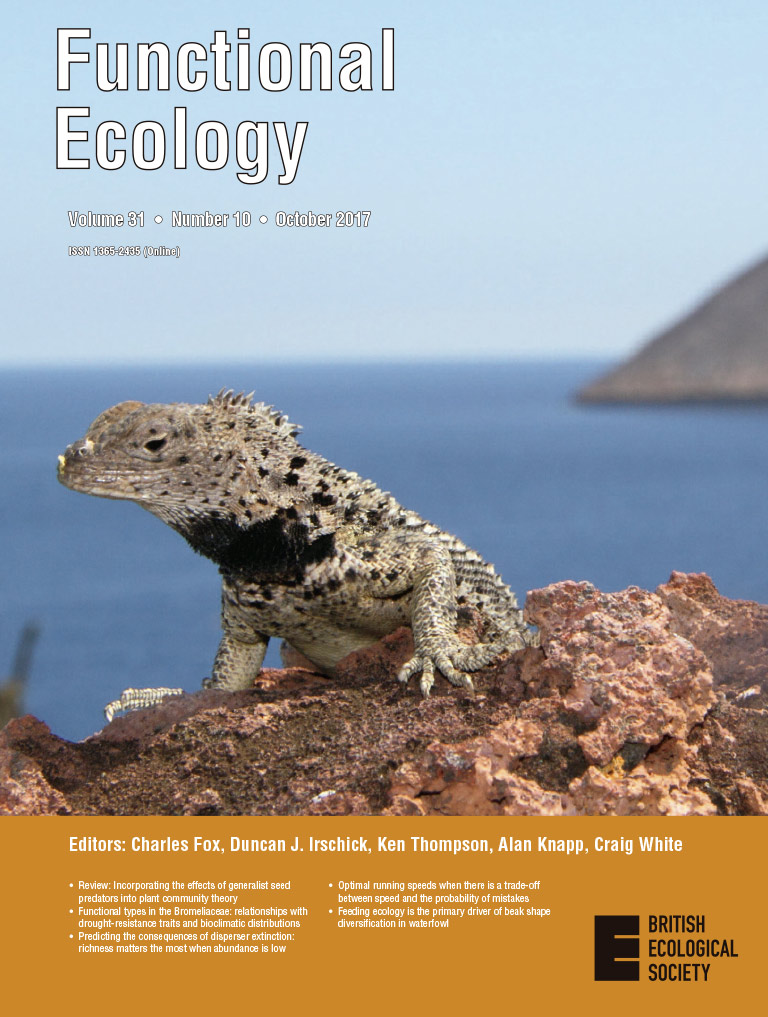
Smaller islands, bigger appetites: evolutionary strategies of insular endemic skinks
Competitive dietary and morphological divergence among co-occurring species are fundamental aspects of ecological communities, particularly on islands. Cabo Verde (~570 km west of continental Africa) hosts several endemic reptiles descended from common ancestors, with sympatric species exhibiting wide morphological variation and competing for limited resources. To explore the mechanisms of resource partitioning between coexisting species, DNA metabarcoding was used to compare the diets of large and small skinks, Chioninia vaillantii and Chioninia delalandii, in sympatric and allopatric contexts on Fogo Island and in a more competitive context on the small and resource-poor Cima Islet. The morphological variation of all populations was also examined to test the character displacement hypothesis and to compare the effect of different competitive scenarios. Results showed significant differences in diet and linear measurements between species and populations. The two sympatric populations of C. delalandii on Fogo and Cima showed similar changes in head morphology compared to the allopatric population, supporting character displacement. The effect of higher competitive pressure on Cima was evidenced by the increased morphological and dietary variation observed. This study demonstrates how sister species develop dietary adaptations/morphologies to maintain stable coexistence, especially in highly competitive scenarios, providing useful insights for effective conservation strategies.

Pinho, Catarina J.; Dinis, Herculano A.; Emerson, Brent C.; Vasconcelos, Raquel.
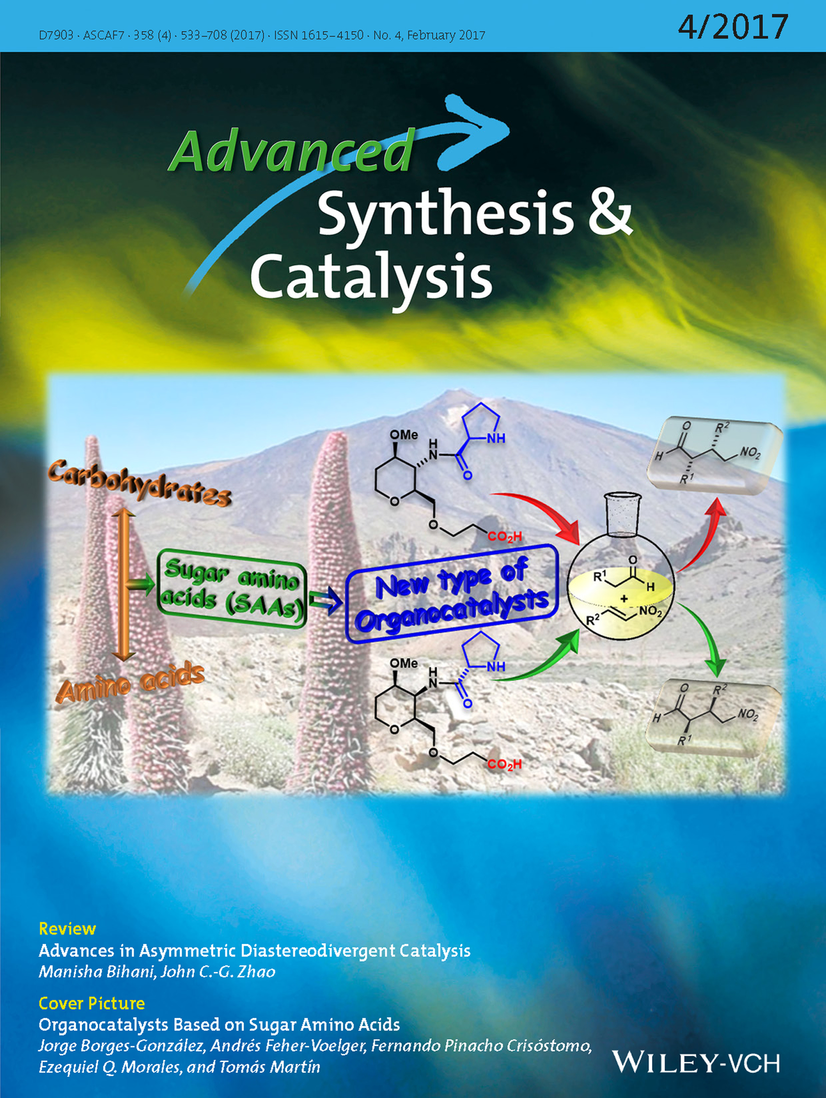
Water as a Reactant: DABCO-Catalyzed Hydration of Activated Alkynes for the Synthesis of Divinyl Ethers
A practical and efficient addition of water to readily available activated alkynes delivering divinyl ethers is reported. The reaction proceeds with full atom economy in a very straightforward experimental procedure. Additionally, of all the tertiary amines studied to catalyze the reaction, the best and most efficient is clearly DABCO (1,4-diazabicyclo[2.2.2]octane). Finally, the solvent choice is crucial for the efficiency of this process and we have found that the reaction is best performed in wet dichloromethane for propiolic esters and alkynones, and in wet acetonitrile for propiolamides.

Diana-Rivero, Raquel; Rivero, David S.; García-Martín, Alba; Carrillo Fumero, Romen; Tejedor, David.
Nematicidal and Insecticidal Compounds from the Laurel Forest Endophytic Fungus Phyllosticta sp.
The search for natural product-based biopesticides from endophytic fungi is an effective tool to find new solutions. In this study, we studied a pre-selected fungal endophyte, isolate YCC4, from the paleoendemism Persea indica, along with compounds present in the extract and the identification of the insect antifeedant and nematicidal ones. The endophyte YCC4 was identified as Phyllosticta sp. by molecular analysis. The insect antifeedant activity was tested by choice bioassays against Spodoptera littoralis, Myzus persicae, and Rhopalosiphum padi, and the in vitro and in vivo mortality was tested against the root-knot nematode Meloidogyne javanica. Since the extract was an effective insect antifeedant, a strong nematicidal, and lacked phytotoxicity on tomato plants, a comprehensive chemical study was carried out. Two new metabolites, metguignardic acid (4) and (-)-epi-guignardone I (14), were identified along the known dioxolanones guignardic acid (1), ethyl guignardate (3), guignardianones A (5), C (2), D (7), and E (6), phenguignardic acid methyl ester (8), the meroterpenes guignardone A (9) and B (10), guignarenone B (11) and C (12), (-)-guignardone I (13), and phyllomeroterpenoid B (15). Among these compounds, 1 and 4 were effective antifeedants against S. littoralis and M. persicae, while 2 was only active on the aphid M. persicae. The nematicidal compounds were 4, 7, and 8. This is the first report on the insect antifeedant or nematicidal effects of these dioxolanone-type compounds. Since the insect antifeedant and nematicidal activity of the Phyllosticta sp. extract depend on the presence of dioxolanone components, future fermentation optimizations are needed to promote the biosynthesis of these compounds instead of meroterpenes.

Díaz, Carmen E.; Andrés, María Fé; Bolaños González, Patricia; González-Coloma, Azucena.
Environmental heterogeneity, rather than stability, explains spider assemblage differences between ecosystems
The open ecosystem (e.g. grasslands, prairies, shrublands) tends to be ecologically less stable than closed one (i.e. forests) and encompassess higher spatial heterogeneity in terms of environmental diversity. Such differences are expected to differentially constrain the diversity and structure of the communities that inhabit each of them, but identifying the specific processes driving contrasting biodiversity patterns between open and closed systems is challenging. In order to understand how environmental variability might structure spider assemblages, both between and within open and closed ecosystems, we implement a high throughput multiplex barcode sequencing approach to generate a dataset for 8585 specimens representing 168 species, across the open ecosystem within the Canary Islands. Combining these with spider sequences from the closed ecosystem within the same islands, we show that spider communities in the open ecosystem show higher species richness, higher beta diversity, and higher proportions of rare species but proportionately lower numbers of endemic species than communities in the closed ecosystem. We furthermore assess if environmental heterogeneity and habitat stability are the major drivers of such differences by assessing spatial genetic structuring and the influence of bioclimatic variables. Our results point to environmental heterogeneity rather than stability as a major driver of spatial patterns between open and closed ecosystems.

Suárez, Daniel; Arribas, Paula; Srivathsan, Amrita; Meier, Rudolf; Emerson, Brent C.
Temperature as an effective biosecurity tool against invasive snakes
The application of thermal treatments could serve as a biosecurity tool to avert snake introduction, which often leads to irreversible ecological impacts. Here, we tested the applicability of conductive heating and thermal fumigation to prevent the spread of the California kingsnake (Lampropeltis californiae), a damaging species established on the island of Gran Canaria, likely to reach other vulnerable regions, and included among the most concerning invasive species of the European Union. We exposed 24 individuals to a thermal gradient to determine species selected temperatures, range of preferred temperatures and voluntary thermal maximum and used other 24 individuals to analyse their response to conductive heating, thermal fumigation and control (no heat) treatments. Lampropeltis californiae selected temperatures of 27.80 ± 1.05 °C (ranging 26.86 °C ± 1.21 °C to 28.68 °C ± 1.25 °C) and a voluntary thermal maximum of 32.50 ± 3.69 °C. Conductive heating and thermal fumigation performed equally well, inducing the exit of 83.33% and 91.67% of all individuals after 14.36 ± 9.25 min and 11.13 ± 8.60 min of exposition, and at a body temperature of 35.66 ± 3.53 °C and 35.57 ± 2.41 °C, respectively. Control treatments produced the exit of 29.17% of all individuals, which came out of the box in 24.80 ± 8.83 min and at a body temperature of 28.60 ± 1.38 °C. Thermal treatments could serve as an effective tool to prevent the inadvertent transportation of L. californiae and other invasive snakes threatening numerous regions around the globe.

Piquet, Julien C.; Maestresalas, Borja; López-Darias, Marta.
Mitochondrial phylogenomics reveals the sister relationship between the endogean Mediterranean raymondionymine weevils and the remaining 51,000+ Curculionidae (Coleoptera)
The tribe Raymondionymini has long been neglected in phylogenetic studies. The tribe is characterized by uncertain monophyly, fluctuating taxonomic status, and a composition prone to instability. All raymondionymine weevils are wingless and have eyes either completely absent or, rarely, consisting of a single ommatidium. With body lengths predominantly below three millimeters, they inhabit deep soil environments and are infrequently collected. The core of this tribe comprises nine genera distributed in Europe and around the Mediterranean region and encompassing 76 species, while six additional genera include 17 species distributed in USA (California), Mexico, Ecuador, Venezuela, Russian Far East, and Madagascar. Here, we present eight new mitogenomes, complemented by one publicly available, encompassing all but two Mediterranean genera of raymondionymine weevils. We used publicly available Curculionoidea mitogenomes to compile an all-inclusive dataset with 391 terminals and a reduced dataset with 61 terminals representing main families of Curculionoidea and subfamilies within Curculionidae. Our maximum likelihood and Bayesian phylogenetic analyses, employing both DNA and amino acids datasets under alternative partition schemes, consistently produced congruent phylogenies. Our results show that the Mediterranean raymondionymines form a strongly supported clade, and their easternmost and morphologically distinct genus Ubychia is sister to the rest of them. Most notably, our results consistently recover a sister relationship between the clade of Mediterranean raymondionymine weevils and a clade encompassing all remaining Curculionidae. Consequently, we propose a revision of weevil taxonomy: (i) Our target group is removed from the non-monophyletic subfamily Brachycerinae; (ii) this clade is resurrected to its former subfamily level within Curculionidae, as the subfamily Raymondionyminae stat. rev; (iii) the nine Mediterranean genera Alaocephala, Alaocyba, Coiffaitiella, Derosasius, Ferreria, Raymondiellus, Raymondionymus, Tarattostichus, and Ubychia compose Raymondionyminae stat. rev; (iv) and non-Mediterranean genera Alaocybites, Bordoniola, Gilbertiola, Homosomus, Neoubychia, and Schizomicrus are considered as “incertae sedis” pending further phylogenetic corroboration. We hypothesize that the remaining Brachycerinae and the non-Mediterranean representatives within Raymondionyminae constitute a series of species-poor early-diverging lineages representing currently unrecognized subfamilies of Curculionidae.

Andújar, Carmelo; Hlaváč, Peter; Grebennikov, Vasily V.
Staurosporine as a Potential Treatment for Acanthamoeba Keratitis Using Mouse Cornea as an Ex Vivo Model
Acanthamoeba is a ubiquitous genus of amoebae that can trigger a severe and progressive ocular disease known as Acanthamoeba Keratitis (AK). Furthermore, current treatment protocols are based on the combination of different compounds that are not fully effective. Therefore, an urgent need to find new compounds to treat Acanthamoeba infections is clear. In the present study, we evaluated staurosporine as a potential treatment for Acanthamoeba keratitis using mouse cornea as an ex vivo model, and a comparative proteomic analysis was conducted to elucidate a mechanism of action. The obtained results indicate that staurosporine altered the conformation of actin and tubulin in treated trophozoites of A. castellanii. In addition, proteomic analysis of treated trophozoites revealed that this molecule induced overexpression and a downregulation of proteins related to key functions for Acanthamoeba infection pathways. Additionally, the ex vivo assay used validated this model for the study of the pathogenesis and therapies of AK. Finally, staurosporine eliminated the entire amoebic population and prevented the adhesion and infection of amoebae to the epithelium of treated mouse corneas.

Rodríguez-Expósito, Rubén L.; Sifaoui, Ines; Salazar-Villatoro, Lizbeth; Bethencourt-Estrella, Carlos J.; José J. Fernández; Díaz-Marrero, Ana Raquel; Sutak, Robert; Omaña-Molina, Maritza; Piñero, José E.; Lorenzo-Morales, Jacob.
Implications of high-resolution velocity and strain rate observations for modelling of Greenlandic tidewater glaciers
Synthetic Aperture Radar (SAR) has been used extensively to determine the surface ice flow velocity of tidewater glaciers and investigate changes in seasonal or annual ice dynamics at medium spatial resolution (⩾100 m). However, assessing tidewater glacier behaviour at these resolutions risks missing key details of glacier dynamics, which is particularly important for determination of strain rates that relate to crevasse formation, depth, and ice damage. Here we present surface ice velocity and strain maps with a 16 m posting derived from high-resolution (1 m) PAZ Ciencia spotlight mode SAR imagery for Narsap Sermia, SW Greenland, for October 2019 to February 2021. Results reveal fine details in strain rate, including an area of compression proximal to the terminus, with an upstream shift of strains through time. The velocity evolution of Narsap Sermia shows distinct seasonal changes starting in summer 2020, which are largely modulated by the subglacial drainage system. Comparison of our results with medium-resolution velocity products shows that while these can capture general strain and velocity patterns, our high-resolution data reveals considerably larger ranges of strain values. This is likely to have implications for tuning strain rate dependent calving and ice damage parameterisations within numerical models.

Fahrner, Dominik; González, Pablo J.; Mair, Douglas W. F.; Lea, James M.
Inter and intra-island genetic structure and differentiation of the endemic Bolle's Laurel Pigeon (Columba bollii) in the Canary archipelago
Islands provide excellent settings for studying the evolutionary history of species, since their geographic isolation and relatively small size limit gene flow between populations, and promote divergence and speciation. The endemic Bolle's Laurel Pigeon Columba bollii is an arboreal frugivorous bird species distributed on laurel forests in four islands of the Canary archipelago. To elucidate the population genetics, we genotyped ten microsatellite loci using DNA obtained from non-invasive samples collected across practically all laurel forest remnants, and subsequently grouped into eight sampling sites. Analyses including F-statistics, Bayesian clustering approaches, isolation by distance tests and population graph topologies, were used to infer the genetic diversity and the population differentiation within and among insular populations. Additionally, we evaluated the effect of null alleles on data analysis. Low genetic diversity was found in all populations of Bolle’s Laurel Pigeon, with no significant differences in diversity among them. However, significant genetic differentiation was detected among all populations, with pigeons from La Palma and El Hierro exhibiting the closest affinity. Bayesian clustering supported population separation between islands, and also detected fine-scale structure within the Tenerife and La Gomera populations. Our results suggest that, despite columbids have a high movement ability, they can show signature of genetic divergence among populations, particularly on oceanic islands. Geological history of the islands and distribution range of habitats could have close influence on the evolutionary trajectories of these birds. This approach can provide practical tools to implement appropriate conservation measures for range-restricted species and their habitat.

Marrero, Patricia; Fregel, Rosa; Richardson, David S.
Dual-Action Therapeutics: DNA Alkylation and Antimicrobial Peptides for Cancer Therapy
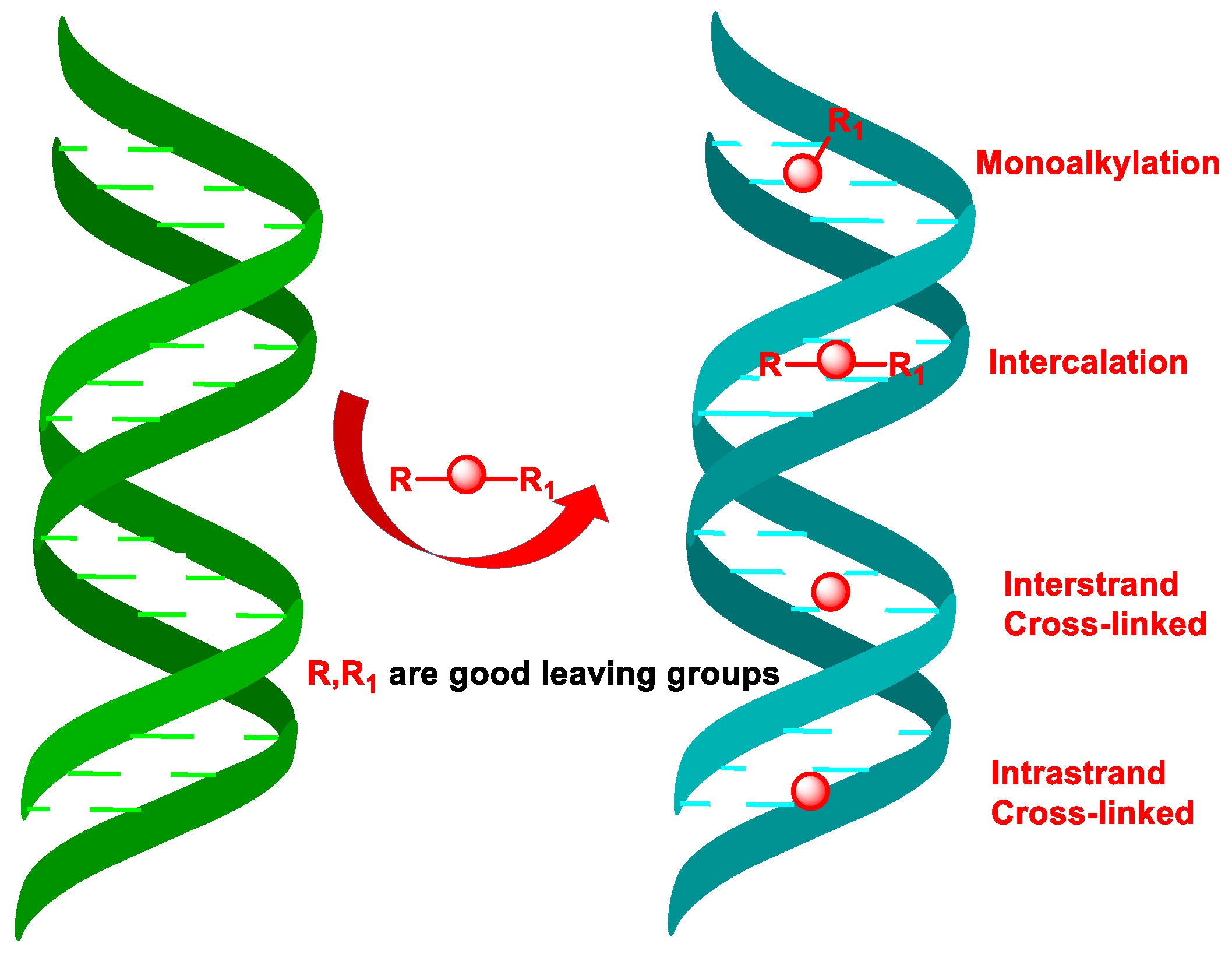
Cancer remains one of the most difficult diseases to treat, requiring continuous research into innovative therapeutic strategies. Conventional treatments such as chemotherapy and radiotherapy are effective to a certain extent but often have significant side effects and carry the risk of resistance. In recent years, the concept of dual-acting therapeutics has attracted considerable attention, particularly the combination of DNA alkylating agents and antimicrobial peptides. DNA alkylation, a well-known mechanism in cancer therapy, involves the attachment of alkyl groups to DNA, leading to DNA damage and subsequent cell death. Antimicrobial peptides, on the other hand, have been shown to be effective anticancer agents due to their ability to selectively disrupt cancer cell membranes and modulate immune responses. This review aims to explore the synergistic potential of these two therapeutic modalities. It examines their mechanisms of action, current research findings, and the promise they offer to improve the efficacy and specificity of cancer treatments. By combining the cytotoxic power of DNA alkylation with the unique properties of antimicrobial peptides, dual-action therapeutics may offer a new and more effective approach to fighting cancer.
Curieses Andrés, Celia María; Pérez de Lastra, José Manuel; Bustamante Munguira, Elena; Andrés Juan, Celia; Pérez-Lebeña, Eduardo.