Publications
This section includes a list of the latest IPNA scientific articles published in journals included in the Science Citation Index (SCI).
In DIGITAL.CSIC, institutional repository of the CSIC, you can find the complete list of scientific articles since 1962, as well as other collections of interest such as congresses, theses, books, informative material, etc. of the centre. The aim of DIGITAL.CSIC is to organize, preserve and disseminate in open access the results of our research.
In the institutional repository of the CSIC, you can find the complete list of scientific articles, as well as other collections of interest such as congresses, theses, books, informative material, etc.
Analysis of the IPNA 2014-2019 Scientific Production: bibliometric analysis from data collected in Scopus and Web of Science.

Unveiling terroir: evaluating the magnitude of the heterogeneity and its main drivers in the Canary Islands wines
The Canary Islands are a Spanish archipelago of volcanic origin in the Atlantic Ocean near the Saharan coast. The extensive intricacy and multitude of variables inherent in the Canary Islands winemaking tradition have posed a substantial challenge, preventing comprehensive research on the main factors contributing to the character of local wine, thus, far. This challenge arises from a convergence of factors including the presence of 14 different grape varieties, and radically different climatic, soil and geographic conditions. This investigation sought to start unraveling this complexity by discerning the impacts of various geographical (specifically, island-related) and management factors (namely, organic vs. conventional practices) on soils and wines within the Canary Islands. Additional variables, such as wine type (red and white) and island of origin, were explored and correlated with the chosen management system. Pairs of organic and conventional wine and soil samples, possessing similar characteristics, were systematically collected from each of the seven wine-producing islands in the Canary archipelago. An examination of elemental composition, oenological attributes and fertility parameters was conducted, followed by comprehensive statistical analysis. Among the variables examined, only the island of origin emerged as statistically significant within the sample. Concerning soil fertility, organic samples exhibited elevated levels of organic matter compared to their conventional counterparts. No notable disparities were observed between the two production methods in terms of soil metal composition and other fertility parameters. However, it is noteworthy that four soil samples surpassed the legally permissible limits for Nickel (Ni) and Mercury (Hg), with three of these instances originating from Lanzarote.

Alonso-González, Pablo; Parga-Dans, Eva; Hernández González, María Mercedes; Arribas, Paula; Acosta Dacal, Andrea Carolina; Pérez Luzardo, Octavio.
Genetic legacies of mega-landslides: Cycles of isolation and contact across flank collapses in an oceanic island
Catastrophic flank collapses are recognized as important drivers of insular biodiversity dynamics, through the disruption of species ranges and subsequent allopatric divergence. However, little empirical data supports this conjecture, with their evolutionary consequences remaining poorly understood. Using genome-wide data within a population genomics and phylogenomics framework, we evaluate how mega-landslides have impacted evolutionary and demographic history within a species complex of weevils (Curculionidae) within the Canary Island of Tenerife. We reveal a complex genomic landscape, within which individuals of single ancestry were sampled in areas characterized by long-term geological stability, relative to the timing of flank collapses. In contrast, individuals of admixed ancestry were almost exclusively sampled within the boundaries of flank collapses. Estimated divergence times among ancestral populations aligned with the timings of mega-landslide events. Our results provide first evidence for a cyclical dynamic of range fragmentation and secondary contact across flank collapse landscapes, with support for a model where this dynamic is mediated by Quaternary climate oscillations. The context within which we reveal climate and topography to interact cyclically through time to shape the geographic structure of genetic variation, together with related recent work, highlights the importance of topoclimatic phenomena as an agent of diversification within insular invertebrates.

Noguerales, Víctor; Arjona, Yurena; García-Olivares, Víctor; Machado, Antonio; López, Heriberto; Patiño, Jairo; Emerson, Brent C.
Harnessing the Power of Metallic Nanoparticles: Antimicrobial Peptide Functionalization with Gold and Silver Nanoparticles
This book accumulates the most recent advancements in the field of bioengineering regarding hybrid science named nanobiotechnology and enriches the readers with vast and comprehensive knowledge about different biomedical applications of nanomaterials. It includes drug and gene delivery, tissue engineering, antimicrobial properties, hyperthermia, cancer therapy, bioimaging, biosensing, photoablation therapy, etc., utilizing the potential of different nanomaterials that are helpful for the well-being of diseased individuals. Furthermore, the concerns about multidrug-resistant microorganisms are increasing daily in the healthcare system. Since conventional therapies fail to combat various infectious diseases, novel nanotechnology techniques provide an alternative approach to developing innovative biomaterials. The novel features of nanomaterials need to be exploited for use in the biomedical engineering domain. They should be fabricated so that the novel multifunctional nanomaterials notonly improve drug efficacy but also reduce their side effects. Moreover, a detailed understanding of the nanotoxicological effects of promising biomedical nanomaterials should necessarily be explored using the cell culture approach. Corona of nanomaterials should be investigated in detail to determine its fate in the biological system regarding safety concerns. This is the most important feature that is novel and explored in this book and would be very helpful for customers like clinicians, scientists, engineers, and technicians who will gain extensive knowledge from this book and work together to get the desired results in the healthcare sector.

González-Almécija, Beatriz; López, R. Manuel; Asensio-Calavia, Patricia; Otazo-Pérez, Andrea; González-Acosta, Sergio; Morales-delaNuez, Antonio; Pérez de Lastra, José Manuel.
Characterizing the Atmospheric Mn Cycle and Its Impact on Terrestrial Biogeochemistry
The role of manganese (Mn) in ecosystem carbon (C) biogeochemical cycling is gaining increasing attention. While soil Mn is mainly derived from bedrock, atmospheric deposition could be a major source of Mn to surface soils, with implications for soil C cycling. However, quantification of the atmospheric Mn cycle, which comprises emissions from natural (desert dust, sea salts, volcanoes, primary biogenic particles, and wildfires) and anthropogenic sources (e.g., industrialization and land-use change due to agriculture), transport, and deposition, remains uncertain. Here, we use compiled emission data sets for each identified source to model and quantify the atmospheric Mn cycle by combining an atmospheric model and in situ atmospheric concentration measurements. We estimated global emissions of atmospheric Mn in aerosols (<10 μm in aerodynamic diameter) to be 1,400 Gg Mn year−1. Approximately 31% of the emissions come from anthropogenic sources. Deposition of the anthropogenic Mn shortened Mn “pseudo” turnover times in 1-m-thick surface soils (ranging from 1,000 to over 10,000,000 years) by 1–2 orders of magnitude in industrialized regions. Such anthropogenic Mn inputs boosted the Mn-to-N ratio of the atmospheric deposition in non-desert dominated regions (between 5 × 10⁻⁵ and 0.02) across industrialized areas, but that was still lower than soil Mn-to-N ratio by 1–3 orders of magnitude. Correlation analysis revealed a negative relationship between Mn deposition and topsoil C density across temperate and (sub)tropical forests, consisting with atmospheric Mn deposition enhancing carbon respiration as seen in in situ biogeochemical studies.

Lu, Louis; Li, Longlei; Rathod, Sagar; Hess, Peter; Martínez, Carmen; Fernandez, Nicole; Goodale, Christine; Thies, Janice; Wong, Michelle Y.; Alaimo, Maria Grazia; Artaxo, Paulo; Barraza, Francisco; Barreto, Africa; Beddows, David; Chellam, Shankarararman; Chen, Ying; Chuang, Patrick; Cohen, David D.; Dongarrà, Gaetano; Gaston, Cassandra; Gómez, Darío; Morera-Gómez, Yasser; Hakola, Hannele; Hand, Jenny; Harrison, Roy; Hopke, Philip; Hueglin, Christoph; Kuang, Yuan-Wen; Kyllönen, Katriina; Lambert, Fabrice; Maenhaut, Willy; Martin, Randall; Paytan, Adina; Prospero, Joseph; González, Yenny; Rodríguez, Sergio; Smichowski, Patricia; Varrica, Daniela; Walsh, Brenna; Weagle, Crystal; Xiao, Yi-Hua; Mahowald, Natalie.
No detectable truncating mutations in large T antigen (LT-Ag) sequence of Merkel cell polyomavirus (MCPyV) DNA obtained from porocarcinomas
Merkel cell polyomavirus (MCPyV) is associated with Merkel cell carcinoma (MCC). In tumor cells the MCPyV large T antigen (LT-Ag) is frequently found truncated and this is considered a major tumor-specific signature. The role of MCPyV in other, non-MCC tumours, is little known. Viral DNA and/or tumour-specific mutations have been sometimes detected in different tumours, but such data are not unequivocal and the involvement of the virus in the tumorigenesis is not clear. In a previous study, we demonstrated a significantly higher prevalence of MCPyV DNA in formalin fixed paraffin embedded (FFPE) porocarcinoma tissues compared to the normal skin.
In the present study, we investigated the presence of truncating mutations in MCPyV LT-Ag coding region in porocarcinoma specimens. Using several overlapped PCR primer pairs, the complete LT-Ag sequence from two biopsies were obtained. No truncating mutations were detected.
The lack of truncating mutations in LT-Ag sequence does not seem to support the role of MCPyV in porocarcinoma oncogenesis. However, an oncogenetic mechanism, different from that proposed for MCC and not associated with the LT-Ag mutations/deletions, cannot be excluded. Further studies of more sequences coding for LT-Ag would be needed to verify this hypothesis.

Arvia, Rosaria; Sollai, Mauro; Massi, Daniela; Asensio-Calavia, Patricia; Urso, Carmelo; Zakrzewska, Krystyna.
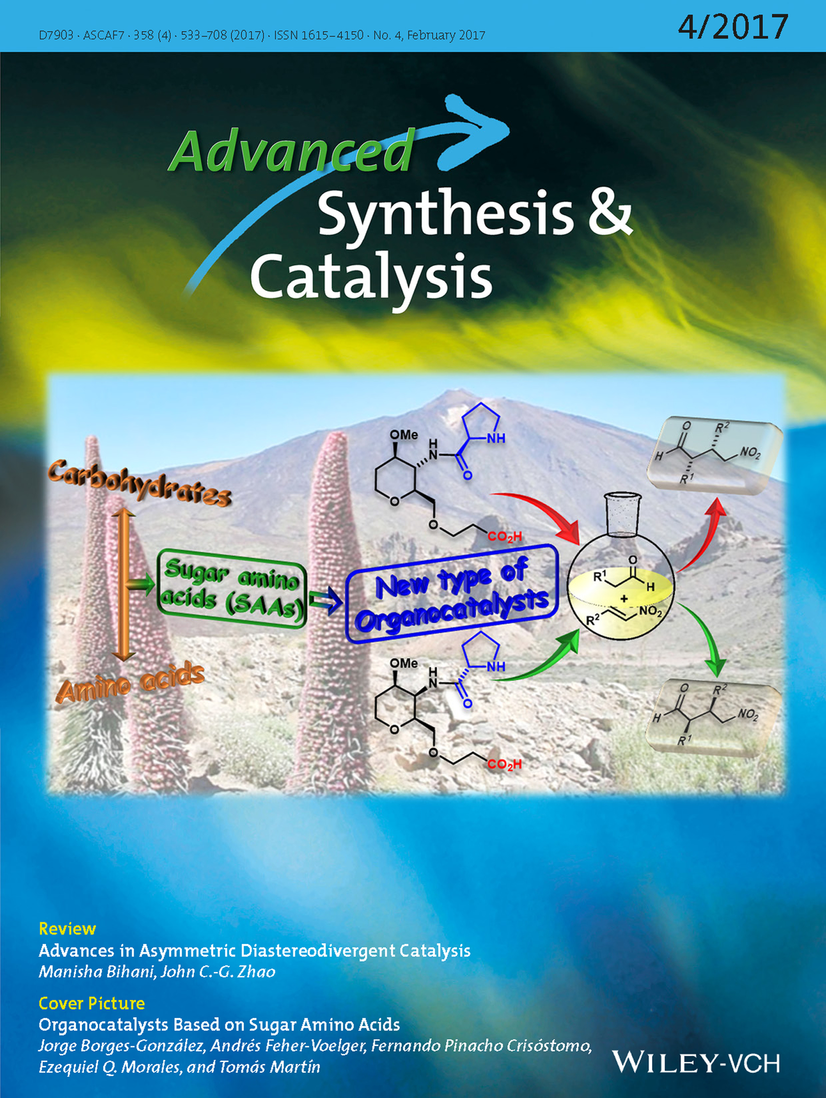
Predisposition in Dynamic Covalent Chemistry: The Role of Non-Covalent Interactions in the Assembly of Tetrahedral Boronate Cages
Directional bonding strategies guide the design of complex molecular architectures, yet challenges arise due to emergent behavior. Rigid structures face geometric constraints and sensitivity to mismatches, hindering the efficient assembly of molecular organic cages (MOCs). Harnessing intramolecular non-covalent interactions offers a promising solution, broadening geometrical possibilities and enhancing adaptability to boost assembly yields. However, identifying these interactions remains challenging, with their full potential sometimes latent until final assembly. This study explores these challenges by synthesizing boronic acid tripods with varied oxygen positions at the tripodal feet and investigating their role in assembling tetrahedral boronate MOCs. Our results reveal substantial differences in the assembly efficiency among tripods. While the building blocks with oxygen in the benzylic position relative to the central aromatic ring form the MOCs in high yields, those with the oxygen atom directly bound to the central aromatic ring, only yield traces. Through X-ray crystallography and DFT analyses, we elucidate how intramolecular interactions profoundly influence the geometry of the building blocks and cages in a relay-like fashion, highlighting the importance of considering intramolecular interactions in the rational design of (supra)molecular architectures.

Rondelli, Manuel; Pasán, Jorge; Fernández, Israel; Martín, Tomás.
Electrophilic Compounds in the Human Diet and Their Role in the Induction of the Transcription Factor NRF2
The phrase “Let food be thy medicine…” means that food can be a form of medicine and medicine can be a form of food; in other words, that the diet we eat can have a significant impact on our health and well-being. Today, this phrase is gaining prominence as more and more scientific evidence suggests that one’s diet can help prevent and treat disease. A diet rich in fruits, vegetables, whole grains, and lean protein can help reduce the risk of heart disease, cancer, diabetes, and other health problems and, on the other hand, a diet rich in processed foods, added sugars, and saturated fats can increase the risk of the same diseases. Electrophilic compounds in the diet can have a significant impact on our health, and they are molecules that covalently modify cysteine residues present in the thiol-rich Keap1 protein. These compounds bind to Keap1 and activate NRF2, which promotes its translocation to the nucleus and its binding to DNA in the ARE region, triggering the antioxidant response and protecting against oxidative stress. These compounds include polyphenols and flavonoids that are nucleophilic but are converted to electrophilic quinones by metabolic enzymes such as polyphenol oxidases (PPOs) and sulfur compounds present in foods such as the Brassica genus (broccoli, cauliflower, cabbage, Brussel sprouts, etc.) and garlic. This review summarizes our current knowledge on this subject.

Curieses Andrés, Celia María; Pérez de Lastra, José Manuel; Bustamante Munguira, Elena; Andrés Juan, Celia; Plou Gasca, Francisco José; Pérez Lebeña, Eduardo.
Resiliencia del pinar canario después de la erupción del volcán Tajogaite (La Palma, 2021)
Durante 85 días (19 de septiembre – 13 de diciembre de 2021), la isla de La Palma sufrió el mayor evento eruptivo desde que se tienen registros históricos. El volcán Tajogaite emitió una gran cantidad de materiales volcánicos y gases, afectando a la población, a la economía local y a la biodiversidad. Tres ecosistemas se vieron afectados: matorral costero, matorral termófilo y pinar canario, siendo este último el que resultó más dañado, especialmente desde el cráter hasta 7 km hacia el sur de la isla. A pesar de ser un hábitat ampliamente estudiado, nunca se había evaluado el impacto de una erupción volcánica sobre su biodiversidad. Este estudio se ha centrado en este ecosistema, a similar altitud del cráter, a lo largo de la dorsal de Cumbre Vieja. Los resultados muestran que la velocidad de recuperación del pinar es más rápida de lo que se pensaba, permitiendo entender mejor los efectos de una erupción volcánica sobre la biodiversidad canaria.

Guerrero Campos, María; Marrero Rodríguez, Patricia; García Becerra, Rafael; Miranda García-Rovés, José Carlos; Domínguez Flores, Tania; Chano González, Víctor; Fariña Trujillo, Beatriz; Nogales, Manuel; Manuel Medina, Félix.
A new eyeless Poecilochroa Westring, 1874 (Araneae: Gnaphosidae) from Gran Canaria, Spain
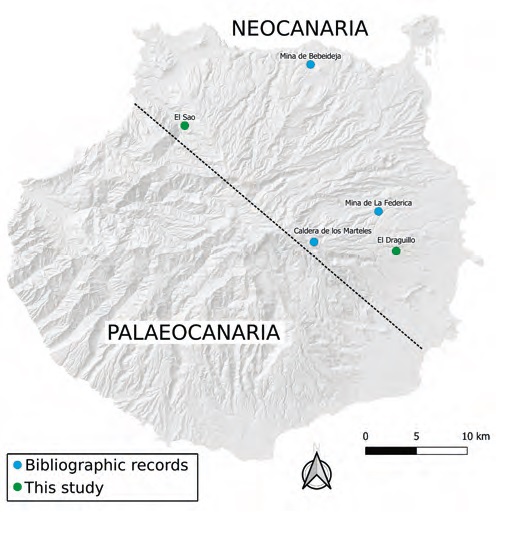
The mesovoid shallow substratum (MSS) of Gran Canaria is known to harbour a rich and diverse underground fauna. Since the 2000s surveys have been intensified in this island and the number of species associated with caves and MSS has steadily increased, now exceeding fifty species. In this study we describe another MSS species from Gran Canaria which is also the first eyeless member of the spider family Gnaphosidae from the Canary Islands. The new species is only tentatively placed in Poecilochroa Westring, 1874 and is named P. exoculata sp. nov.
Lissner, Jørgen; Suárez, Daniel; López, Heriberto.
Acrylonitrile derivatives: In vitro activity and mechanism of cell death induction against Trypanosoma cruzi and Leishmania amazonensis
Leishmaniasis and Chagas disease are parasitic infections that affect millions of people worldwide, producing thousands of deaths per year. The current treatments against these pathologies are not totally effective and produce some side effects in the patients. Acrylonitrile derivatives are a group of compounds that have shown activity against these two diseases. In this work, four novels synthetic acrylonitriles were evaluated against the intracellular form and extracellular forms of L. amazonensis and T. cruzi. The compounds 2 and 3 demonstrate to have good selectivity indexes against both parasites, specifically the compound 3 against the amastigote form (SI = 6 against L. amazonensis and SI = 7.4 against T. cruzi). In addition, the parasites treated with these two compounds demonstrate to produce a programmed cell death, since they were positive for the events studied related to this type of death, including chromatin condensation, accumulation of reactive oxygen species and alteration of the mitochondrial membrane potential. In conclusion, this work confirms that acrylonitriles is a source of possible new compounds against kinetoplastids, however, more studies are needed to corroborate this activity.

Bethencourt-Estrella, Carlos J.; Delgado-Hernández, Samuel; López-Arencibia, Atteneri; San Nicolás-Hernández, Desirée; Salazar-Villatoro, Lizbeth; Omaña-Molina, Maritza; Tejedor, David; García-Tellado, Fernando; Lorenzo-Morales, Jacob; Piñero, José E.