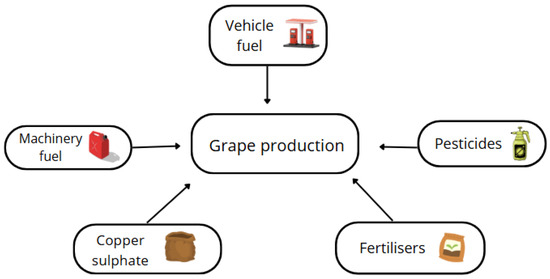
A Life Cycle Assessment (LCA) of viticulture in the Tacoronte-Acentejo Designation of Origin was the primary goal of this research, aiming to examine and quantify the environmental impacts generated by viticulture and winemaking processes. Data for the investigation were collected through tailored questionnaires administered to viticulturists and winemakers affiliated with the Regulatory Council of the Tacoronte-Acentejo Designation of Origin. These surveys were designed to gather detailed information on the inputs used in both viticulture and winemaking processes, encompassing all stages of production. The results were classified into the following four environmental impact categories: carbon footprint, human toxicity, depletion of fossil energies, and ozone layer depletion. In viticulture, the major contributors to environmental impact included vehicle fuel consumption, pesticide application, and the use of copper sulfate. In the winery phase of production, electricity consumption and glass bottle production were the primary factors with significant environmental implications. These findings provide valuable insights for vineyard and winery managers in favor of implementing more sustainable practices, such as reducing fuel for vehicles and machinery and the use of pesticides in the vineyard phase, and reducing glass bottle usage and electricity consumption in the winery phase. Through this research, they will be able to focus their efforts on the inputs that generate the greatest environmental impacts in order to reduce them.
Barroso Castillo, Santiago M.; Martín-Pinillos Castellanos, Ignacio de; Cruz-Pérez, Noelia; Santamarta, Juan C.; Alonso-González, Pablo.